




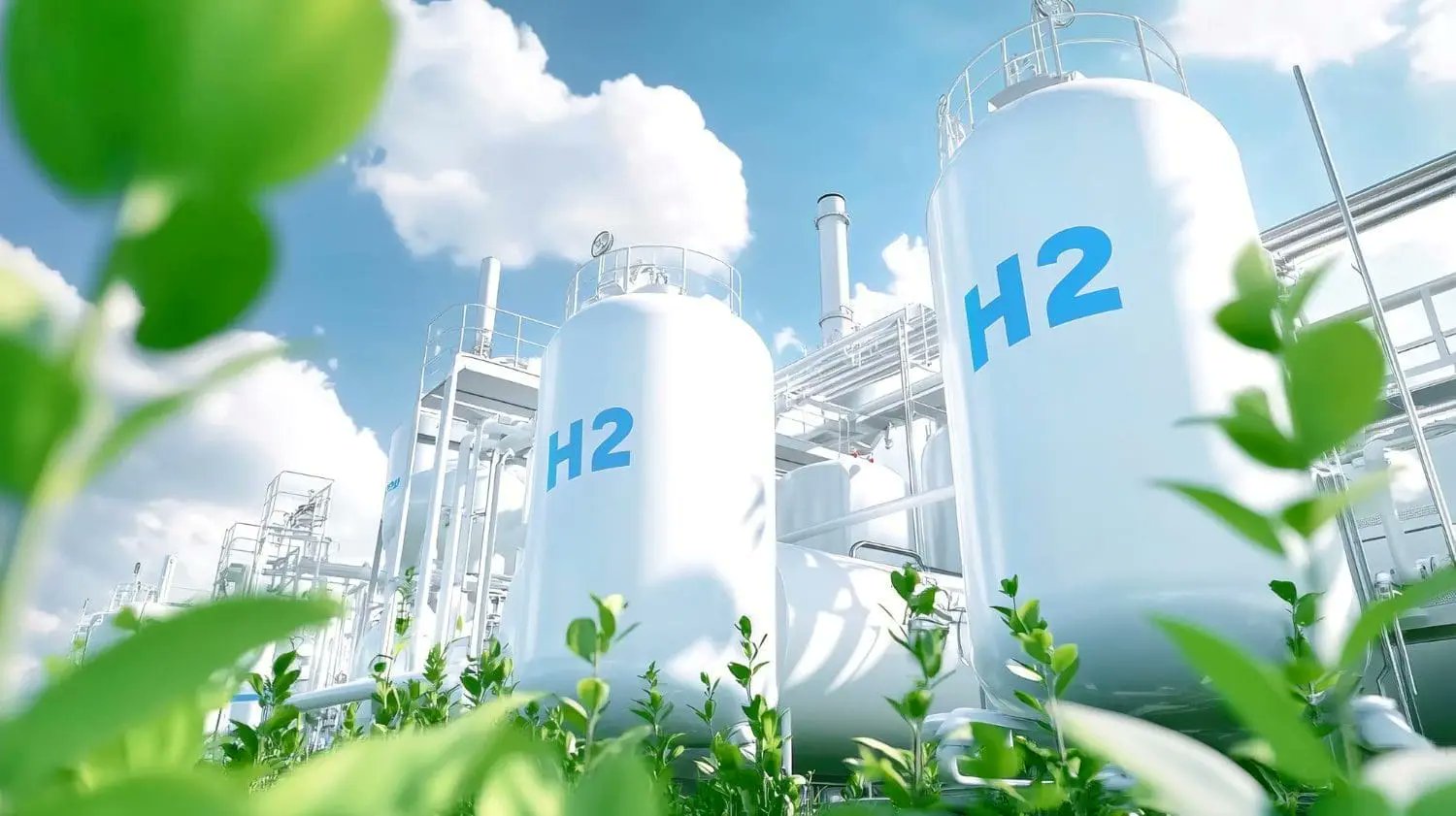
Institutional investors are backing a growing pipeline of green hydrogen infrastructure in Southern Africa, with the Green Climate Fund (GCF) approving $140 million for projects in South Africa and Namibia under a programme targeting $1.2 billion in investment.
The financing will flow through Climate Fund Managers’ Climate Investor Three (CI3), a blended finance facility targeting industrial decarbonisation. Its investments cover renewable electricity generation, green hydrogen production and downstream industries using derivatives such as green ammonia and green methanol.
The programme is expected to finance between 30 and 40 projects, install approximately 1.52GW of renewable energy capacity and avoid an estimated 24.2 million tonnes of emissions, according to Catherine Koffman, the GCF’s Regional Director for Africa.
South Africa’s SA-H2 Fund and Namibia’s SDG Namibia One Fund will receive separate allocations through the Southern African Industrial Decarbonisation Facility (SIDF), which the GCF established as its first platform dedicated to decarbonising industrial value chains in Africa.
Institutional investors back Southern Africa’s hydrogen pipeline
The financing builds on capital already committed to the two investment vehicles, particularly South Africa’s SA-H2 Fund, which reached a first close of ZAR 3 billion, approximately $182 million, in August 2026.
Investors included South Africa’s Public Investment Corporation, acting on behalf of the Government Employees Pension Fund, Sanlam Life, the Industrial Development Corporation and the Development Bank of Southern Africa (DBSA).
The fund had previously established a project pipeline covering green ammonia production and green methanol. Its investment structure combines development funding with construction equity to support projects at different stages of preparation.
The GCF’s November approval adds $84 million to SA-H2’s Construction Equity Tranche. SDG Namibia One will receive the remaining $56 million, comprising $15 million for development financing and $41 million for construction equity.
CI3 also secured initial Development Tranche commitments of €150 million from Invest International and the European Commission under the European Union’s Global Gateway initiative.
The wider $1.2 billion programme therefore brings together public climate finance, development institutions and private institutional investors. Climate Fund Managers will continue raising capital towards the target.
Andrew Johnstone, Chief Executive Officer of Climate Fund Managers, said the GCF financing would help attract institutional investment into commercially viable industrial decarbonisation projects, particularly those facing substantial development and construction costs.
Two national funds target different industrial opportunities
The investment programme is built around separate project pipelines reflecting the industrial opportunities in South Africa and Namibia.
SA-H2 is managed by SA-H2 Fund Managers, a joint venture between Climate Fund Managers and Invest International.
Its existing development agreements include Hive Hydrogen’s green ammonia project in Coega and Green eFuels Producers’ facility, which plans to produce green methanol from wastewater.
The projects extend the potential applications of green hydrogen into chemical production and industrial feedstocks. Green ammonia is used extensively in fertiliser production, while methanol serves as an industrial chemical and can also be used in fuel applications.
Namibia’s investment vehicle has a different ownership and management structure. SDG Namibia One is managed by Namibia Energy Transition Fund Managers, a partnership involving Climate Fund Managers, Invest International and the Environmental Investment Fund of Namibia.
Its project pipeline includes the Hyphen green hydrogen project, HyIron’s Oshivela green iron project, Zhero Molecules’ Walvis Bay green ammonia development and the Dâures green fertiliser project.
The combination of hydrogen production and downstream processing is central to the investment programme. It creates opportunities to use renewable electricity in the production of industrial materials and chemical products that traditionally depend on carbon-intensive processes.
Benedict Libanda, Chief Executive Officer of the Environmental Investment Fund of Namibia, said the country’s green hydrogen ambitions required capital, specialist expertise and meaningful local participation.
Namibia’s involvement in SDG Namibia One gives its national investment institution a direct role in a fund intended to develop the country’s emerging hydrogen industry.
Blended finance provides capital for project development and construction
The financing structure addresses two stages of investment that can present different challenges for large industrial projects.
CI3 operates through a Development Tranche supporting early-stage project preparation and Construction Equity Tranches providing capital as projects advance towards construction.
The GCF’s contribution includes catalytic first-loss equity, which is designed to absorb some investment risk and encourage additional participation from commercial and institutional investors.
For large hydrogen developments, the financing requirements extend beyond electrolysers and renewable electricity installations. Projects also need supporting infrastructure for water supply, processing, storage, transportation and the distribution of finished products.
The DBSA serves as the GCF Accredited Entity for the Southern African Industrial Decarbonisation Facility. It oversees the programme and is responsible for monitoring and reporting to the climate fund.
Dr Phindile Masangane, Group Executive Programmes at DBSA, said the financing would help channel investment into projects with high industrial emissions while supporting economic growth and employment.
She identified derisking investment and attracting private capital as central to the bank’s role in implementing the programme.
The institutional arrangements also connect the two national funds to a wider network of international financing partners. Invest International participates in both investment vehicles, while the European Commission has supported the programme through earlier development financing commitments.
African climate investment expands beyond energy generation
The Southern African programme forms part of a wider expansion of structured climate investment across Africa.
Earlier in November, the African Finance Corporation and Green Climate Fund announced a $690 million Africa Sovereign Climate Facility targeting climate investment in participating African countries. The facility is focused on sovereign climate financing, while the Southern African programme concentrates on industrial value chains.
Other financing initiatives are targeting different infrastructure requirements. In Kenya, KenGen secured KSh10.5 billion in financing for a 100MWh battery energy storage system, supported by contributions from the GCF and the World Bank’s International Development Association.
These investments demonstrate the different channels through which development institutions and climate financiers are supporting renewable energy infrastructure, from electricity storage to industrial production.
South Africa and Namibia are also competing within a wider African market for green hydrogen investment. EcoNews’ reporting on African climate investment markets has identified Morocco, Egypt, Kenya and Nigeria among the countries attracting investor attention through different combinations of renewable resources, infrastructure and financing opportunities.
Morocco, in particular, has been pursuing large-scale hydrogen developments, with six projects approved in 2025 carrying an estimated combined investment value of $32.5 billion.
For South Africa and Namibia, the CI3 programme is intended to connect renewable energy resources with industrial production through dedicated investment vehicles. Its $1.2 billion target covers the development and construction of hydrogen infrastructure and associated industries, with the GCF’s latest $140 million approval providing additional capital for the two national project pipelines.
Source: https://econews.co.ke/


