




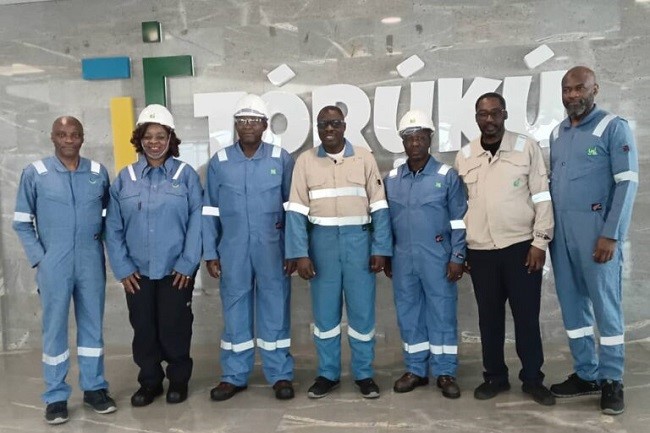
The Nigerian Midstream and Downstream Petroleum Regulatory Authority (NMDPRA) and Nigeria LNG Limited (NLNG) have pledged to strengthen domestic gas supply and improve distribution as part of efforts to reduce cooking gas prices and enhance Nigeria’s energy security.
The commitment was made during a visit by the Authority Chief Executive (ACE) of NMDPRA, Mr. Rabiu A. Umar, to NLNG’s plant and the ongoing Train 7 project site in Bonny.
Umar said increasing gas penetration, strengthening energy security and improving operational efficiency remained key priorities of the regulator, in line with President Bola Tinubu’s agenda to expand gas utilisation and improve access to natural gas across the country.
He said the authority was working to ensure adequate availability of cooking gas and natural gas, particularly in underserved communities, through increased domestic production and the development of distribution infrastructure.
According to him, projects such as the ongoing Ajaokuta-Kaduna-Kano (AKK) gas pipeline would help extend gas supply to more parts of the country and strengthen the domestic gas market.
The NMDPRA chief executive disclosed that cooking gas prices had started declining by between N300 and N400 per kilogramme following increased supply and interventions to address distribution challenges.
He explained that price fluctuations were largely driven by demand and supply conditions, as well as logistical difficulties involving transportation, shipping and vessel availability.
Umar noted that although Nigeria produces part of the gas consumed locally, domestic supply could still be affected by global shipping constraints. He said the regulator was engaging industry operators to address these challenges and improve product availability.
He added that discussions with NLNG were aimed at increasing the volume of liquefied petroleum gas (LPG) supplied to the domestic market to ease supply pressures and moderate prices.
On whether cooking gas could sell below N1,000 per kilogramme, Umar said he could not guarantee a specific price because the market was deregulated.
He, however, assured consumers that the authority would ensure prices remained cost-reflective and take appropriate action whenever pricing components exceeded acceptable limits or exposed consumers to exploitation.
Umar also urged NLNG to expand its production capacity through additional LNG trains, assuring the company of the regulator’s commitment to providing an enabling environment for investment and business growth.
Earlier, NLNG’s Managing Director and Chief Executive Officer, Mr. Adelaye Falade, said the company was working to increase gas production and domestic LPG supply to improve availability and address price distortions in the market.
Falade identified inadequate feed gas supply as a major constraint affecting the optimal utilisation of the company’s production facilities, noting that operating existing facilities at full capacity remained a priority.
He said NLNG had an installed production capacity of 22 million tonnes per annum (MTPA) across its six trains but was currently operating at about 80 per cent capacity year-to-date.
This, he noted, represented an improvement from the approximately 60 per cent capacity utilisation recorded in the previous two years.
The NLNG chief executive said the ongoing Train 7 project would add 7.5 MTPA to the company’s LNG production capacity, increasing its total installed capacity to approximately 30 MTPA.
He explained that the project would also raise NLNG’s domestic LPG supply capacity by 50 per cent, from the current 500,000 tonnes to about 750,000 tonnes annually.
According to Falade, the additional capacity would help close the gap between domestic LPG production and national demand, while reducing Nigeria’s dependence on imported cooking gas.
He disclosed that local production currently accounts for about 40 per cent of the country’s LPG requirements, while imports make up the remaining 60 per cent.
He attributed part of the high cost of cooking gas to the country’s dependence on imported supplies, explaining that increased domestic production would help reduce exposure to import costs and improve price stability.
Falade recalled that cooking gas sold for about N2,400 per kilogramme in some locations in June, despite NLNG’s loading price ranging between N800 and N900 per kilogramme.
He said increased local production, efficient distribution and sustained collaboration with the regulator were necessary to address the wide gap between loading and retail prices.
He also commended NMDPRA for its interventions in resolving logistical challenges affecting LPG discharge at NLNG’s terminal in Lagos, noting that the measures would enable the company to increase supplies to the domestic market.
Describing the engagement as historic, Falade said effective regulation should go beyond enforcing compliance to creating an environment where businesses could operate efficiently and contribute to economic development.
He expressed optimism that stronger cooperation between both organisations would support industry growth, expand domestic gas utilisation and deliver greater benefits to Nigerians.
Also speaking, NLNG’s General Manager, Production, Mr. Nnamdi Anowi, highlighted the company’s operational achievements, including the loading of 6.485 LNG cargoes in November 2026 and the annual supply of 500,000 tonnes of LPG to the Nigerian market.
He also listed the company’s six operational LNG trains, with a combined production capacity of 22 MTPA, alongside its fleet of 22 dedicated LNG vessels and LPG vessels.
Anowi further disclosed that NLNG had an asset base of $22.9 billion, revenue of $149.6 billion, dividends of $47.2 billion and tax payments of $10.8 billion.
However, he identified vandalism, gas leakages and disruptions caused by repair activities as some of the challenges affecting the company’s operations.
He also highlighted NLNG’s contributions to sustainable development through investments in education, healthcare, employment and infrastructure.
Anowi called for stronger collaboration between NLNG and NMDPRA to improve operational efficiency, address industry challenges and support sustainable economic growth in Nigeria.


