




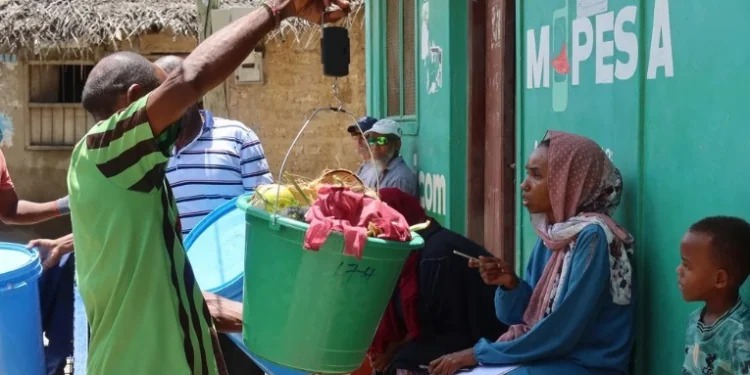
Two Kenyan environmental initiatives, The Flipflopi Project and Komb Green Solutions, have won international recognition at the 2026 Water, Air, Food Awards (WAFA) held in Denmark.
The Flipflopi Project, based in the Lamu Archipelago, won the Air Award, while Komb Green Solutions, founded in Korogocho, Nairobi, received the Youth Climate Action Award.
The winners were announced on November 20 during the Generation Green Workshop at Copenhagen Business School, as part of the Green Business Forum 2026.
The two initiatives emerged winners from 12 finalists representing 10 countries across five continents. According to WAFA, the selection was based on their impact on local communities and the potential to expand their solutions to other regions.
Established in 2016, The Flipflopi Project works to tackle plastic pollution along Kenya’s coastline by promoting plastic recovery, recycling and community participation.
The initiative established Lamu County’s first plastic recovery and recycling facility, which currently serves 70 per cent of the Lamu Archipelago and 28 per cent of the county’s population.
Through the facility, collected plastic waste is sorted and processed into durable recycled plastic planks. The process provides income opportunities for local residents while preventing plastic waste from entering the ocean or being burned in open spaces.
The project also gained international attention for constructing the world’s first traditional sailing dhow made entirely from recycled plastic. The vessel has been used to raise awareness about marine pollution and promote restrictions on single-use plastics across East Africa.
According to figures released by the project, it has recovered 350,000 kilogrammes of plastic since its establishment, collecting between 10 and 12 tonnes monthly.
Of the recovered materials, 73,000 kilogrammes have been converted into recycled plastic planks, while another 122,000 kilogrammes of PET bottles have been recovered for recycling.
The initiative also reported preventing emissions equivalent to 318 tonnes of carbon dioxide between June 2022 and December 2024 by keeping plastic waste out of open fires. It further recorded a 20 per cent reduction in recyclable plastic at local dumpsites.
Beyond its environmental impact, the project has created economic opportunities for people in low-income communities. WAFA said it has supported more than 1,000 people and generated over $40,000 in direct income.
The project reported that 95 per cent of those supported previously had no stable source of income, while women accounted for 60 per cent of the beneficiaries.
It has also partnered with Lamu Polytechnic to provide vocational training in plastic recycling and related skills. Through the partnership, 106 students have graduated from an accredited 12-week training programme.
Meanwhile, Komb Green Solutions, established in 2018 by Christopher Waithaka in Korogocho, Nairobi, focuses on engaging young people in tackling waste management challenges.
The initiative promotes recycling and the transformation of discarded materials into useful products, providing young people with opportunities to participate in environmental protection while developing practical skills.
The recognition of both initiatives highlights the growing role of community-led innovation in addressing environmental challenges, particularly plastic pollution, waste management and climate action.
Their achievements also demonstrate how locally developed solutions can combine environmental protection with economic empowerment and create models that can be adapted by other communities.


