




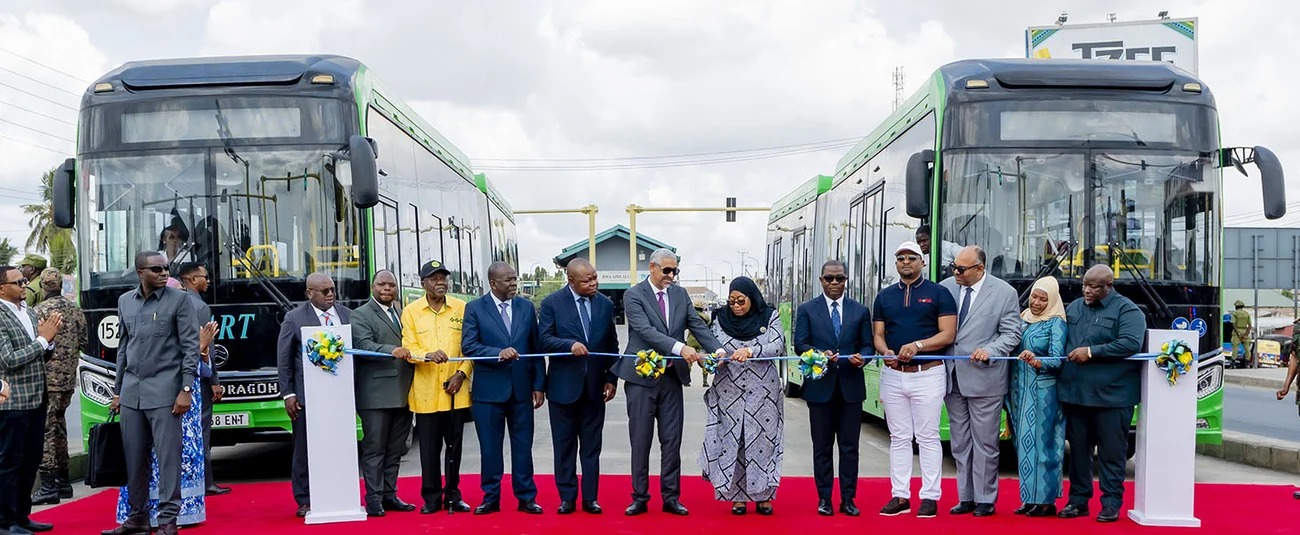
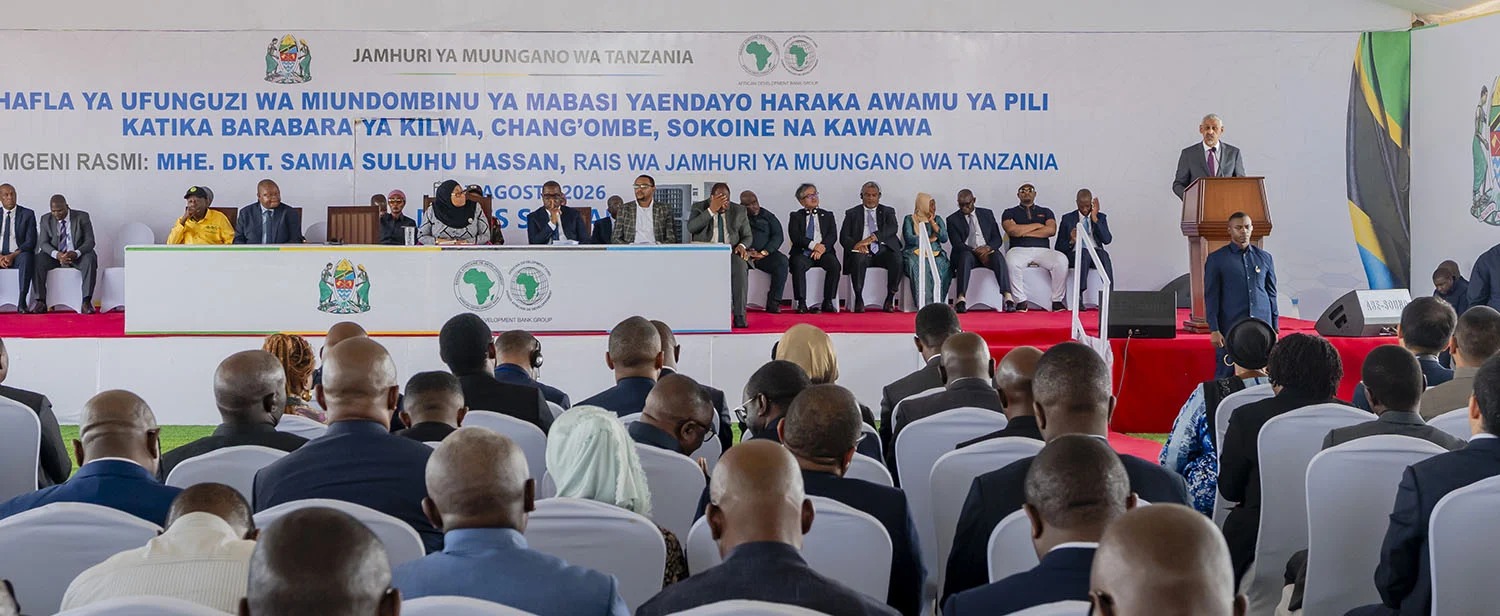
The Presidcnt of the United Republic of Tanzania, Dr Samia Suluhu Hassan, and the President of the African Development Bank Group, Dr Sidi Ould Tah, have officially the launched the city’s Bus Rapid Transit (BRT) Phase II project recently at a colourful event.
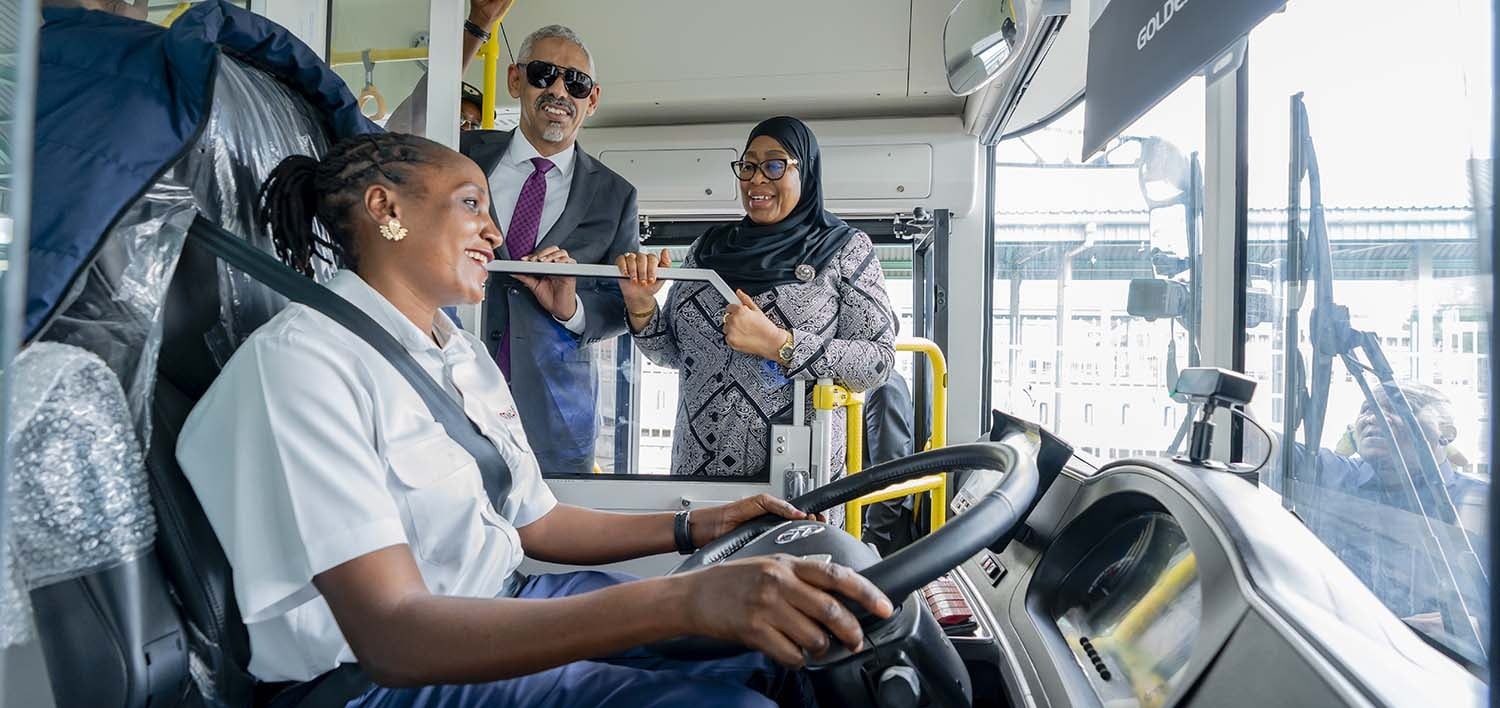
Hundreds of residents, business owners, merchants and young people waved and cheered as President Suluhu Hassan and Dr Ould Tah, traveled down Kilwa Road in one of the new buses due to run the dedicated routes of the Dar es Salaam BRT Phase II project corridor.
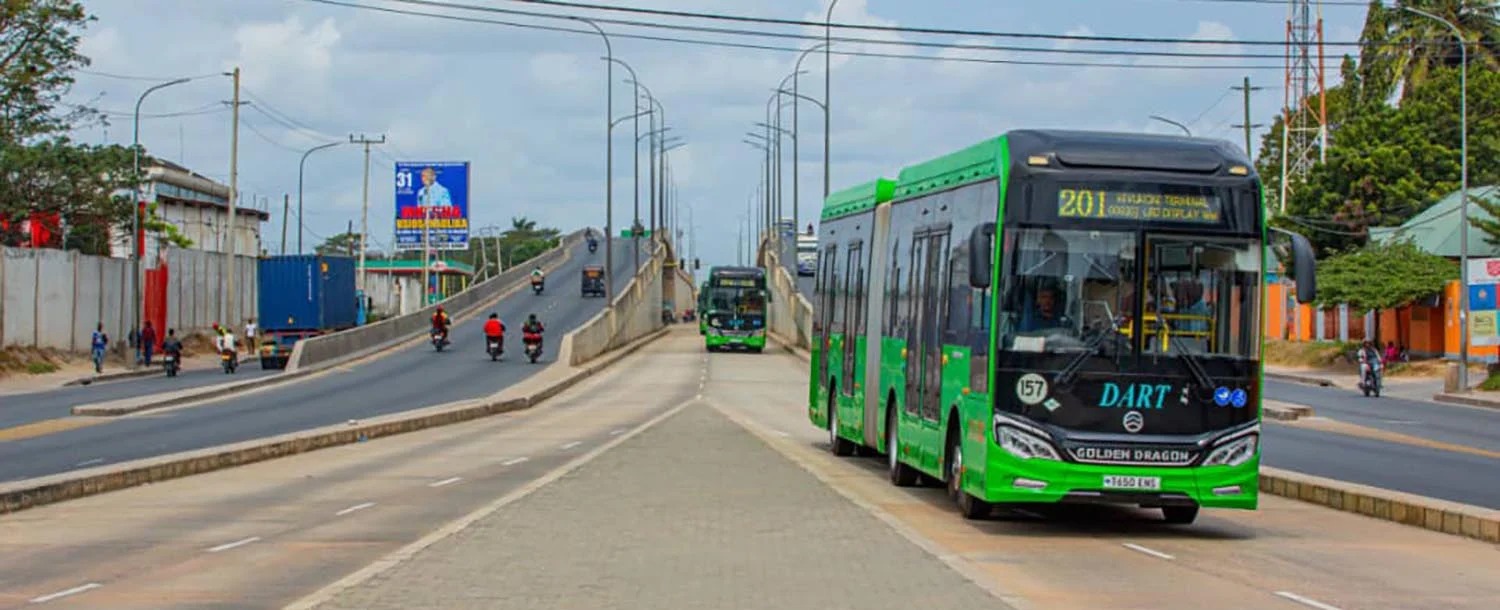
The new corridor delivers 20.3 kilometres of dedicated BRT road infrastructure, two flyovers, 26 passenger stations, a mega bus depot, two off-road terminals, four feeder stations, a pedestrian bridge and improved facilities for pedestrians and other road users.
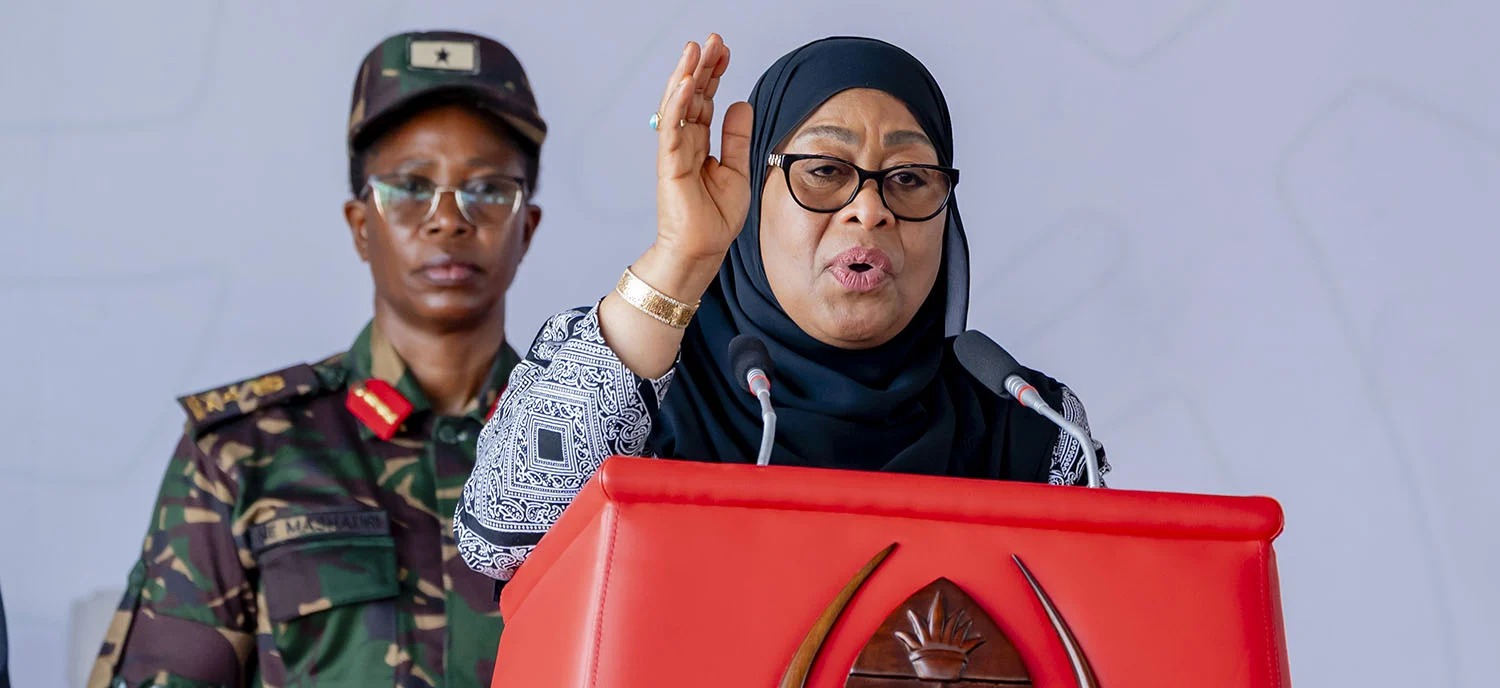
During the ceremony, President Suluhu Hassan expressed “profound gratitude” to the Bank Group for the transformational investment that has eased mobility and provided reliable transportation in one of Dar es Salaam’s low-income neighborhoods.
“Comprehensive transport is critical in the development of a nation,” Suluhu Hassan said, noting that resilient infrastructure supports urban growth and enables development.
The African Development Bank Group and the Africa Growing Together Fund financed the project with $155 million, and the Tanzania National Roads Agency (TANROADS) implemented it.
The project extends modern, high-capacity public transport from Mbagala through Kilwa and Kawawa Roads to the city centre, connecting seamlessly with the first phase of the bus route network. The project represents one of Tanzania’s largest investments in sustainable urban transport and forms part of the city’s long-term mobility master plan.
The Bank Group President, Dr Ould Tah, said the project represents far more than a new transport corridor.
“THIS IS NOT ONLY THE COMPLETION OF A TRANSPORT PROJECT,” OULD TAH SAID. “IT IS THE DELIVERY OF A NATIONAL VISION: A VISION OF A MODERN, CONNECTED, INCLUSIVE AND PRODUCTIVE DAR ES SALAAM, WHERE MOBILITY SUPPORTS OPPORTUNITY, COMPETITIVENESS, SHARED PROSPERITY AND IMPROVED QUALITY OF LIFE.”
Passenger services began in October 2025, and for residents, the impact is already being felt, with travel times along one of the city’s busiest routes having fallen from 90 to roughly 30 minutes. Passenger volumes have also tripled to about 90,000 per day since the BRT service began, and further improvements are expected as services reach full capacity.
The project is also expected to improve access to jobs, schools, healthcare and markets while easing congestion, improving air quality and supporting economic growth.
Dr Ould Tah added that the success of the project would ultimately be measured by its impact on people’s lives.
“For the people of Dar es Salaam, the value of this project will not be measured only in kilometres of road, stations or buses. It will be measured in shorter journeys, safer travel, cleaner air, better access to jobs and services, and more time returned to families and communities,” he said.
FOR MANY, THE TRANSFORMATION OF THE BUS SYSTEM IS LARGELY PERSONAL, RESTORING DIGNITY TO THE DAILY COMMUTE. “MBAGALA RESIDENTS USED TO BE MOCKED BECAUSE BEFORE WE WOULD BOARD BUSES THROUGH THE WINDOW,” EXPLAINED MINISTER OF WORKS, ABDALLAH HAMIS ULEGA, A FORMER MBAGALA RESIDENT. “NOW WE QUEUE AT THE BUS STATION AND MOUNT THE BUSES NORMALLY.”
Dedicated bus lines have also been created for students, who historically had to push through morning crowds, and would often arrive late to school. Once fully operational, the bus fleet will consist of 250 clean energy buses and will reduce greenhouse gas emissions by 76% annually along the corridor from 250 tons to 60.
Beyond the physical infrastructure, the project has strengthened institutions, supported road safety initiatives, built technical capacity and created employment during construction, with women accounting for 13 percent of the workforce.
The project also lays the foundation for future phases of Dar es Salaam’s BRT network to which President Suluhu Hassan announced plans for expansion and extended services to the neighbouring Coast Region.
Reflecting on the achievement, Dr Ould Tah reaffirmed the Bank’s long-term commitment to Tanzania.
“TOGETHER, WE HAVE INVESTED IN A CLIMATE-SMART FUTURE WHERE DAR ES SALAAM CAN CONTINUE TO GROW AS A DYNAMIC, CONNECTED AND GLOBALLY COMPETITIVE AFRICAN CITY. THIS IS TRANSFORMATION THE AFRICAN DEVELOPMENT BANK IS PROUD TO SUPPORT IN TANZANIA, AND WORTH REPLICATING ACROSS OUR CONTINENT,” HE SAID.
The Bank Group’s current active portfolio in the country stands at roughly $4 billion across 30 operations, making Tanzania one of the Bank’s largest country programs. Infrastructure accounts for approximately 81% of commitments, aiming to tackle the country’s significant investment needs in transport, energy, water and regional connectivity.


