




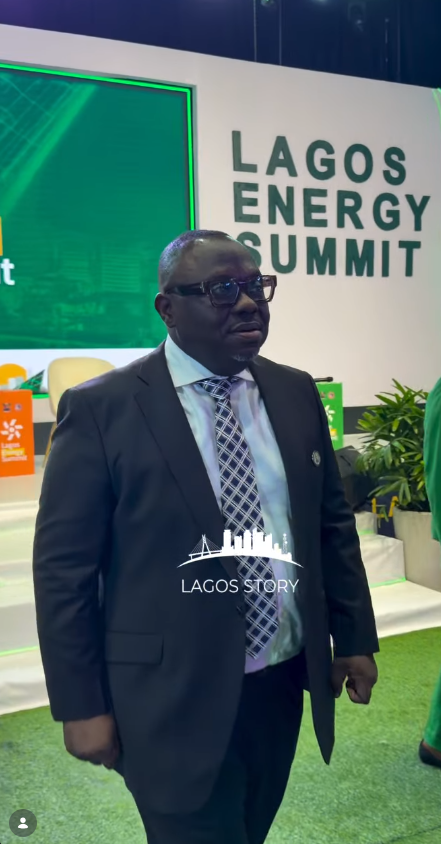
The Lagos State Government has unveiled plans to improve electricity supply across the state through a phased approach that will prioritise reliable power in communities, strengthen electricity infrastructure and attract private sector investment.
The plan was disclosed by the Lagos State Commissioner for Energy and Mineral Resources, Mr Biodun Ogunleye, while delivering a keynote address titled “The Lagos Pathway: Our Agenda, the Facts and the Opportunities to Scale Reliable Power” at the second edition of the Lagos Energy Summit 2026.
The summit, which held from November 10 to 11 at the Landmark Event Centre, Victoria Island, Lagos, had the theme, “Lagos Energy Evolution: Transforming the Future.” It brought together policymakers, investors, regulators, development partners and other industry stakeholders to discuss opportunities for building a reliable, sustainable and affordable electricity market.
Speaking on the state’s electricity ambitions, Ogunleye said Lagos must move beyond establishing laws and institutions to delivering measurable improvements in electricity supply and consumer experience.
He noted that Lagos currently has more than 20 gigawatts (GW) of independent, self-powered generators operating across homes, industries and communities, highlighting the extent of the state’s dependence on alternative power sources.
The commissioner stressed that the priority should be to improve the number of hours electricity is supplied, strengthen consumer confidence and make power more affordable to support economic activities across the state.
He explained that the Lagos electricity market had moved from the legislative and institutional development stages to the execution phase, making it necessary to translate existing policies and structures into practical results.
According to him, the state’s strategy is to first establish what he described as “islands of reliability” across different communities and business districts before connecting them into a wider electricity market.
He explained that the approach would involve securing contracted electricity supply, establishing reliable service arrangements and ensuring that operators are accountable for the quality of power delivered to consumers.
Ogunleye added that appropriate Power Purchase Agreements (PPAs), Distribution Use of System arrangements and metering standards would be required to make the electricity supply model sustainable and replicable across different parts of the state.
He further explained that electricity performance would no longer be assessed only through technical losses or the number of megawatts generated, but also through the actual experience of consumers.
This, he said, would include the number of hours electricity is available, the duration of power interruptions and how quickly electricity providers respond to consumer complaints.
The commissioner identified seven critical areas that must work together to achieve the state’s 24-hour electricity ambition.
These include building a functional electricity market, significantly increasing generation capacity through independent power producers, electricity traders and embedded power solutions, and improving transmission and distribution infrastructure.
Others are reducing electricity losses within communities, achieving the state’s 100 per cent metering target, ensuring cheaper gas supply to Lagos and establishing an effective system for monitoring the entire electricity value chain.
He warned that failure in any part of the electricity supply chain could undermine the state’s ambition to deliver reliable 24-hour power.
Addressing concerns about the 24/7 electricity target, Ogunleye clarified that it does not mean every resident and community would receive uninterrupted electricity immediately.
He described the target as a gradual process that would be achieved over time, adding that increasing generation capacity alone would not solve the electricity crisis without corresponding improvements in substations, feeders, transmission lines and meters.
He also dismissed suggestions that Lagos intended to disconnect from the national grid, explaining that the state’s plan was to develop a more resilient electricity system within the country’s national grid structure.
According to him, Lagos wants to establish different power segments that can continue operating through embedded generation and other independent energy assets, even when there is a major disruption to the national grid.
He maintained that the initiative would strengthen the national electricity market rather than weaken it, particularly by improving payment guarantees and reducing investment risks for electricity suppliers and financial institutions.
On concerns that a commercially sustainable electricity market could make power more expensive for low-income households, Ogunleye argued that effective metering, particularly prepaid meters, would allow consumers to manage their electricity consumption according to their financial capacity.
He also emphasised that Lagos’ electricity development plans would not be limited to the state, noting that the government was interested in supporting the development of power markets across Nigeria by providing opportunities for states to commercialise their available energy resources.
On existing financial obligations within the Lagos electricity market, he assured stakeholders that the state would respect previous agreements and address outstanding debts through repayment arrangements and appropriate financial instruments.
He called on government agencies, regulators, generation companies, transmission and distribution operators, and investors to accelerate their contributions towards achieving the state’s electricity objectives.
Earlier, in his welcome address, Ogunleye described electricity as a critical foundation for economic growth, industrial competitiveness and improved living standards.
He noted that Lagos has an estimated electricity requirement of 12,000 megawatts, while conventional grid supply remains below 1,000 megawatts, creating a significant gap that has increased dependence on self-generation among households and businesses.
He highlighted the Lagos State Electricity Law and the establishment of institutions, including the Lagos State Electricity Regulatory Commission and the Lagos State Independent System Operator, as important steps towards developing a competitive, transparent and regulated electricity market.
He also acknowledged the Federal Government’s electricity sector reforms and ongoing infrastructure investments, particularly the Presidential 24/7 Energy Zone Initiative, which identifies Lagos as a pilot state, alongside interventions in Apapa and Egbin.
The commissioner maintained that the success of the state’s electricity reforms would ultimately be determined by the reliability, accessibility and affordability of electricity delivered to residents and businesses.
As the summit brought together stakeholders to examine the future of electricity in Lagos, Ogunleye urged industry players to focus on measurable results rather than announced generation figures.
“Let us count reliable hours we are able to get in our neighbourhoods, not only megawatts that have been announced,” he said.


