




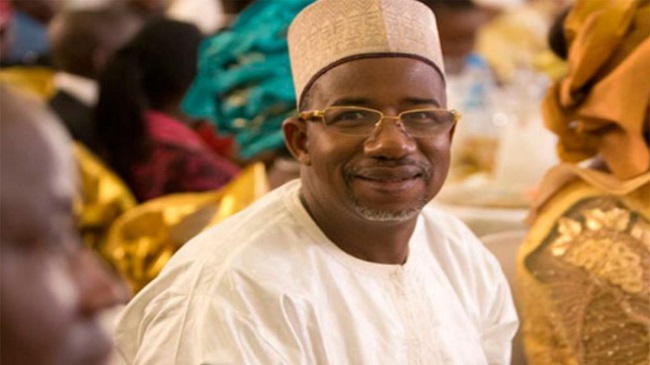
Gov. Bala Mohammed of Bauchi State says N29 billion will be spent on erosion and flood control project aimed at protecting some 213,000 people, restoring degraded environments and sustaining economic activities.
The governor made this known during the inauguration of the project in Bauchi, the state capital, recently.
He said that the project aligned with his administration’s vision of modernising infrastructure, improving living conditions and building resilient communities.
Mohammed said the project would also deepen community participation through stakeholder engagement in implementation, monitoring and evaluation processes.
He explained that the devastating erosion sites stretching across communities, including Wuntin Dada, Sabon Kaura, Abubakar Tatari Ali Polythenic, Gwallagan Mayaka and surrounding areas, had for years posed serious threats to lives, property and economic activities.
“What started as small storm water channels that children could easily cross had expanded into massive erosion corridors measuring over 60 metres wide and 50 metres deep in some areas.
“These environmental disasters have consumed homes, farmlands, roads, plots of land and sources of livelihood.
“Most unfortunately, they have also claimed lives and placed thousands of families under constant fear and uncertainty,” he said.
The governor added that downstream communities also suffered seasonal flooding, forcing many residents to remain awake during heavy rainfall for fear of floodwaters destroying their homes and livelihoods.
He noted that unmanaged erosion and poor drainage systems had created serious public health concerns, including increased malaria and water-related diseases due to stagnant water.
“This project is not merely an engineering intervention; it is a public health intervention, a social protection intervention and a long-term investment in human dignity and community well-being,” he said.
Mohammed, therefore, said that restoring affected areas would improve security by reclaiming abandoned erosion corridors often used for criminal activities and improving access within the communities.
He said the project would create both direct and indirect employment opportunities for skilled and unskilled workers in construction, welding, fabrication, block-making, security, catering, transportation and logistic services.
According to him, local traders, artisans and transport operators are also expected to benefit from increased commercial activities during the implementation phase.
The governor said the restoration of wetlands and improved water management systems would support irrigation farming, landscaping and small-scale enterprises capable of strengthening household incomes and food security.
“Environmental restoration can serve as catalyst for economic growth, job creation and poverty reduction,” he said.
He explained that the project was conceptualised and captured in the state’s expression of interest submitted to the World Bank in 2021, noting that through sustained engagements, detailed engineering designs and collaboration with development partners, the state secured approval for implementation.
The governor disclosed that the project would restore approximately 9,842 hectares of degraded land, provide relief to more than 213,000 people and channel more than 14 million cubic metres of water annually for productive use, including irrigation and other economic activities.
He added that the contract was awarded to Traction Nigeria Limited through competitive procurement process guided by World Bank standards.
Dr Kabir Ibrahim, the State Project Coordinator, Agro-Climatic Resilience in Semi-Arid Landscapes (ACReSAL), said that the government would embark on a major erosion control project from Tsohon Kamfani to Gwallagan Mayaka to address the growing impact of flooding and environmental degradation in the area.
He said motorcycles would be distributed to community leaders to support monitoring activities and enable them to serve as whistleblowers for full implementation of the project.
According to him, affected communities have been empowered with hand pumping machines and eewing machine, while students benefitted from school bags as part of the project intervention.
Ibrahim added that the project would also implement a Resettlement Action Plan (RAP) aimed at supporting persons affected by erosion, particularly those expected to relocate from high-risk areas.
He explained that 45 persons would benefit from the empowerment component of the programme.
Ibrahim noted that the intervention was designed not only to address erosion challenges but also to provide sustainable means of income for affected residents.
Source: Environews


