




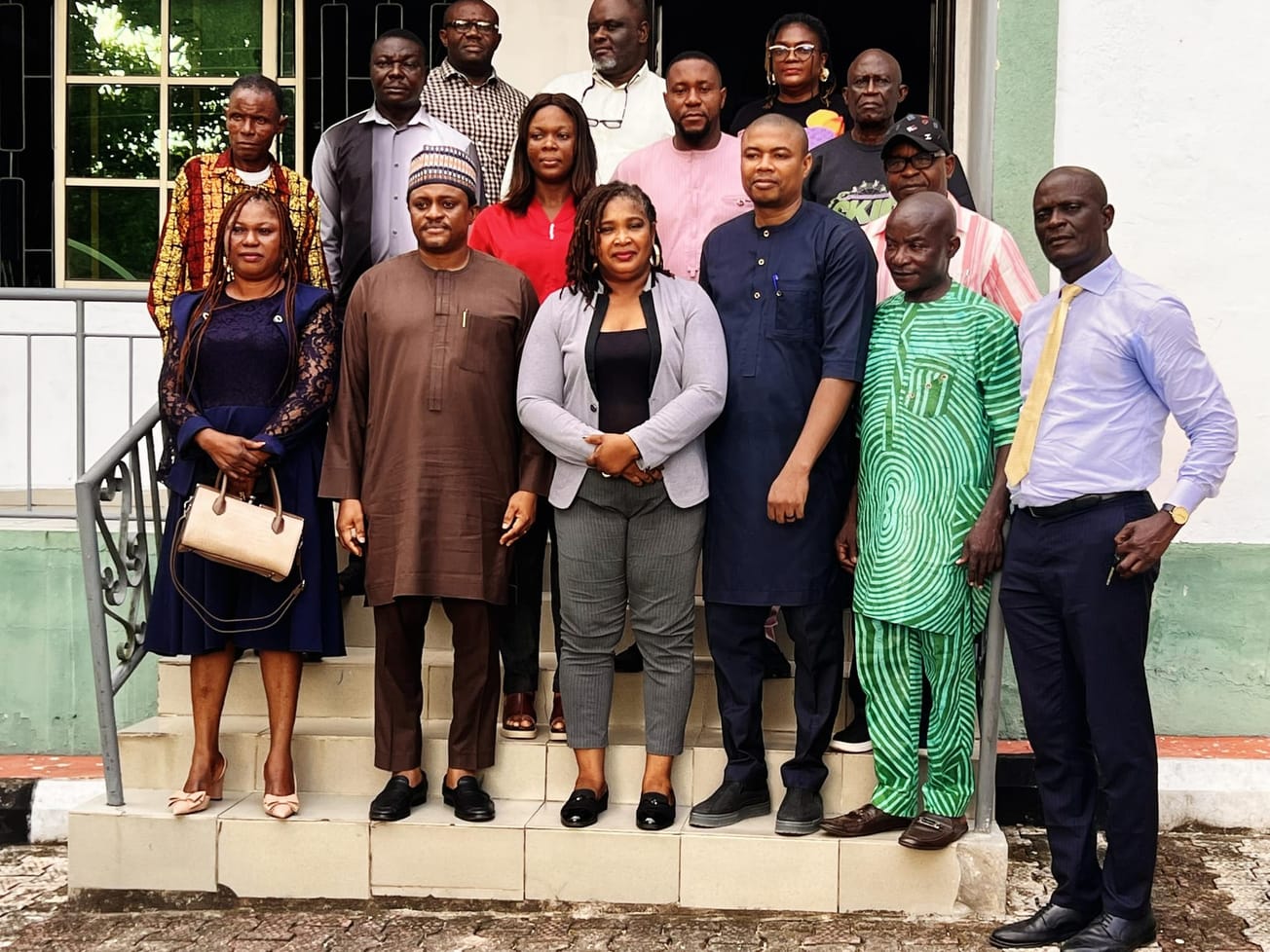
The Cross River State Government has reaffirmed its commitment to building a sustainable and resilient agricultural economy, highlighting significant achievements recorded under its flagship Project Grow Initiative aimed at transforming farming into a climate-smart, commercially viable, and inclusive sector.
Speaking at a press conference in Calabar recently, the Commissioner for Agriculture and Irrigation Development, Hon. Johnson Andiambey Ebokpo, said the administration of Governor Bassey Edet Otu is leveraging agriculture as a catalyst for sustainable development, rural prosperity, food security, and economic diversification.
According to Ebokpo, despite the state’s abundant natural resources, favourable climate, and strong farming heritage, agricultural productivity has historically been hindered by weak market systems, limited financing opportunities, poor infrastructure, and inadequate value-chain integration.
To address these challenges, the government established Project Grow in November 2023 as a Special Purpose Vehicle designed to unlock agricultural potential through market-driven interventions, private-sector participation, and sustainable value-chain development.
“Our mission is to create a modern agricultural economy that generates value across production, processing, marketing, distribution, and export while ensuring that farming remains profitable, environmentally sustainable, and attractive to young people and investors,” Ebokpo said.
He stressed that agriculture remains central to Governor Otu’s development agenda and called on investors, development partners, financial institutions, farmers, and the media to support efforts to build a resilient food system capable of delivering long-term economic and social benefits.
Providing further details, Project Director Denis Ikpali described Project Grow as a Market Systems Development programme designed to address structural barriers that limit agricultural growth, including poor market access, financing gaps, inadequate aggregation systems, and limited demand linkages.
Unlike conventional interventions that focus solely on increasing production, Ikpali said the initiative prioritises sustainable market integration by connecting farmers to structured buyers before planting, thereby reducing waste, improving income security, and strengthening supply-chain efficiency.
Since its launch, the programme has expanded across all 18 local government areas of Cross River State, supporting key agricultural clusters in Odukpani, Ogoja, Obubra, Yakurr, Yala, Ikom, Obudu, and Obanliku.
Project Grow currently supports a diversified portfolio of value chains, including rice, maize, cassava, animal fodder, and aquaculture as primary focus areas, while soybean, cowpea, wheat and sorghum, groundnut, and orange-fleshed sweet potato serve as secondary crops selected for their market demand, nutritional value, and potential to drive inclusive economic growth.
A major sustainability milestone has been the strengthening of farmer capacity through partnerships with development organisations. More than 5,300 farmers have been trained in Good Agricultural Practices, financial literacy, and modern farming techniques through collaboration with German-funded NGO AFOS. These interventions are helping farmers improve yields, reduce post-harvest losses, and adopt more efficient and environmentally responsible production methods.
The programme also supported the cultivation of about 450 hectares of maize and soybean farms during the 2025 farming season, contributing to increased food production and rural livelihoods.
Through collaboration with Flour Mills of Nigeria, Project Grow conducted specialised training programmes for soybean farmers and extension agents, enhancing compliance with quality standards required for national supply chains. The initiative has further stimulated local economic development by facilitating the emergence of 28 agribusiness enterprises, including aggregators and service providers, while creating 391 direct jobs across multiple agricultural value chains.
One of the programme’s most significant breakthroughs is the signing of an offtake agreement with Flour Mills of Nigeria for the supply of 2,000 metric tonnes of soybean and 20,000 metric tonnes of maize valued at approximately N18 billion.
The agreement provides guaranteed market access for farmers and agribusinesses, reducing market uncertainty and encouraging investment in sustainable agricultural production.
In a landmark development, Cross River recently delivered its first test consignment of 11.4 metric tonnes of soybean to Flour Mills in Ibadan, marking the state’s entry into structured national agricultural supply networks and demonstrating the viability of its market-led agricultural transformation strategy.
Access to finance remains a critical pillar of the initiative. To de-risk agricultural lending and attract greater private-sector participation, Project Grow has introduced a Cash Back Guarantee Scheme that is expected to unlock up to N150 billion in agricultural financing over the coming years.
To date, the programme has facilitated more than N3 billion in agricultural financing, with an additional N1.5 billion expected to reach farmers and agribusinesses ahead of the 2026 farming season. Through collaboration with the National Agricultural Development Fund (NADF), plans are also underway to support the cultivation of 2,000 hectares of rice through input financing arrangements.
The initiative is further advancing sustainable agricultural development through partnerships with ETG to improve access to quality inputs, boost productivity, and attract long-term investment into the agricultural ecosystem.
Looking to the future, the state government has approved the establishment of a Centre of Excellence for Agricultural Training and Development and an Indigenous Community Seed Multiplication Centre. These facilities are expected to strengthen local capacity, improve access to high-quality planting materials, and promote knowledge transfer to farmers.
The government has also approved plans for a urea fertiliser plant aimed at improving fertiliser availability, reducing supply-chain constraints, supporting local production, and enhancing agricultural productivity.
For the 2026 farming season, Project Grow targets the cultivation of approximately 1,000 hectares of soybean farms across participating communities, further expanding opportunities for smallholder farmers and agribusiness operators.
While acknowledging challenges such as inflation, rising logistics costs, commodity price volatility, and limited access to structured finance, Ikpali said the programme is adopting data-driven planning, stronger public-private partnerships, and adaptive implementation strategies to ensure long-term sustainability.
With its emphasis on market access, farmer empowerment, climate-smart practices, financial inclusion, and value-chain development, Project Grow is increasingly positioning Cross River State as a model for sustainable agricultural transformation capable of delivering food security, job creation, rural development, and inclusive economic growth.


