




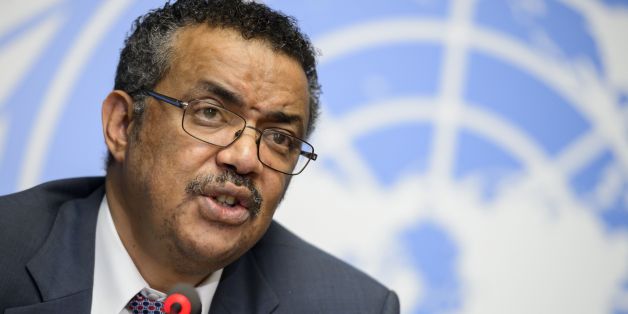
Dr Tedros Ghebreyesus, Director-General of the World Health Organisation (WHO), Dr Tedros Ghebreyesus, says Ebola cases in the Democratic Republic of the Congo (DRC) have risen to 344 confirmed infections, with 60 deaths recorded so far.
Speaking during a news conference on Wednesday, June 3, 2026, Ghebreyesus said the backlog of suspected Ebola cases had dropped significantly from more than 1,000 to 116 as laboratory testing capacity continued improving across affected areas.
The WHO chief provided the update after returning from the outbreak epicentre in Ituri Province, where he met political leaders, frontline health responders and community groups involved in controlling the disease outbreak.
According to him, WHO’s latest risk assessment remains very high at the national level, high at the regional level, and low globally, inof spite ongoing efforts to contain transmission and strengthen surveillance.
He said confirmed cases had been reported across 24 health zones in Ituri, North Kivu and South Kivu provinces, underscoring the scale of the outbreak and challenges facing response teams.
“Treatment capacity has expanded with three centres and 80 beds now open in Bunia, plus units in Mongbwalu, Rwampara, Beni, Goma and Bukavu.
“Six people have recovered in DRC and two in Uganda, but contact tracing still lags at 45 per cent against the 90 per cent target needed to control spread,” he said.
Ghebreyesus said the outbreak had crossed international borders, with Uganda recording 15 confirmed cases and one death, including a Congolese resident who travelled through the United Arab Emirates.
He added that a U.S. citizen infected in DRC remained under treatment in Germany, while WHO continued coordinating with Ugandan and UAE authorities on contact tracing and exposure-risk assessments.
The WHO Director-General identified five major challenges slowing response efforts and emphasised the urgent need for stronger surveillance systems, community engagement and improved operational access in affected regions.
“First, testing delays persist, so WHO is decentralising labs to Mongbwalu, Beni, Aru, Nyakunde and Tchomia. Second, only 45 per cent of contacts are being followed in DRC due to insecurity and displacement.
“Third, blanket travel restrictions are disrupting supply chains in spite of WHO recommending exit screening instead.
“Fourth, community mistrust remains high, with some leaders still doubting Ebola is real. Building trust is now a core priority and Fifth, there are still no approved vaccines or therapeutics,” he said.
According to him, WHO has convened its Medical Countermeasures Network to accelerate trials and diagnostics, stressing that leadership, community ownership and trust remained essential to ending the outbreak successfully.
“Our ultimate measure of success is not whether we stop this outbreak. We will.
“DRC has stopped 16 previous Ebola outbreaks.
“The real measure is what we do to prevent the 18th and 19th, if communities survive Ebola only to die from malaria, malnutrition or other diseases, we have not really helped them.
“WHO pledged to stay after the outbreak ends to help build stronger health and humanitarian services under government leadership,” he said.


