




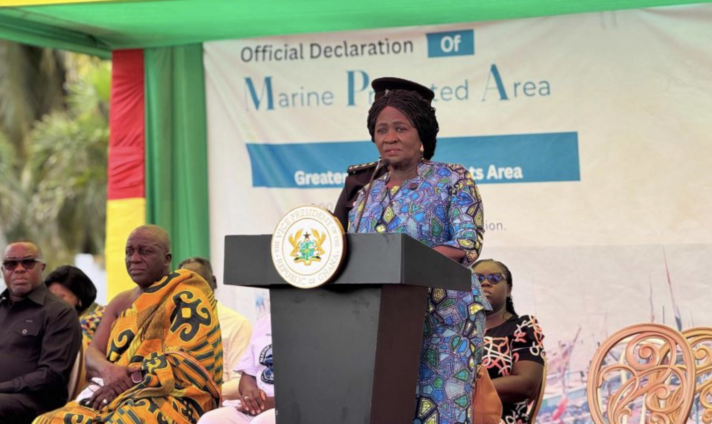
Ghana has formally declared its first marine protected area (MPA), marking a major milestone in efforts to restore declining fish stocks and strengthen marine conservation after more than 15 years of planning.
Vice President Naana Jane Opoku-Agyemang announced the designation on April 14, establishing the protected zone in the Greater Cape Three Points area, the country’s southernmost tip along the Atlantic coast.
The MPA covers roughly 700 square kilometres of coastal and marine ecosystems and is considered a critical spawning and nursery ground for small pelagic fish species such as sardinella, anchovy and mackerel. Authorities say protecting the area is key to rebuilding fish populations that have been severely depleted by overfishing, illegal practices and climate-related pressures.
Under the new framework, the protected area will include a strictly conserved core zone where fishing is prohibited, alongside multiple-use zones where activities such as fishing will be permitted under tighter regulation.
Officials say the initiative forms part of a broader national strategy to rebuild Ghana’s fisheries sector and support long-term food security. Small pelagic fish account for a significant share of animal protein intake in the country, making the sustainability of these stocks critical to livelihoods and nutrition.
The designation follows years of policy development, scientific research and stakeholder consultations, including Cabinet approval in October 2025. It also aligns with Ghana’s wider “blue economy” agenda, which seeks to balance marine conservation with economic activity in coastal communities.
Ghana’s fisheries have faced mounting pressure from a growing artisanal fleet, destructive industrial trawling practices and climate change impacts. In response, the government has introduced measures such as seasonal fishing closures, a moratorium on new artisanal fishing canoes and stricter vessel registration systems.
Stakeholders say the MPA represents a shift from policy commitments to on-the-ground implementation. The site will be managed under a co-management model involving 21 coastal communities, with local representatives participating in governance structures and contributing traditional knowledge to the design of the protected zones.
The initiative had previously faced uncertainty after funding cuts to international development support, including from USAID, which had backed fisheries reforms in the country.
Next steps will focus on finalising zoning regulations and strengthening monitoring, enforcement and compliance systems to ensure the effectiveness of the protected area.
Environmental groups and fisheries experts have described the declaration as a significant step toward restoring marine ecosystems and securing the long-term sustainability of Ghana’s fisheries.


