




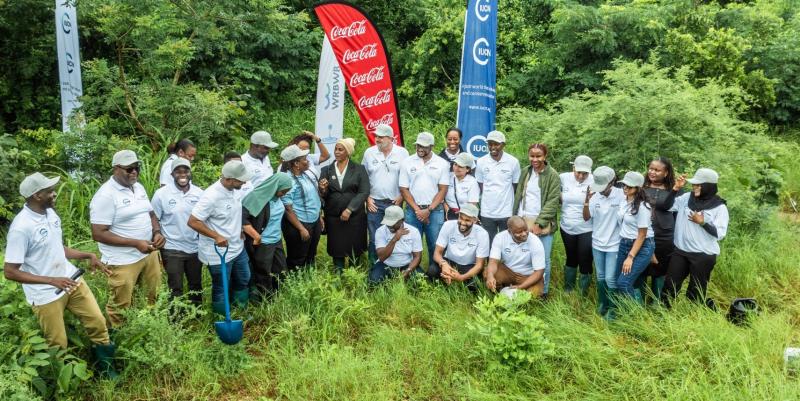
The The Coca-Cola Company system has committed $1.94 million to restore the Ruvu Basin, a critical water source for Dar es Salaam, as water stress intensifies across eastern Tanzania.
The funding will target the Ngerengere catchment in the Ruvu sub-basin, where ecosystem degradation and rising demand are placing increasing pressure on already strained water resources. The project centres on nature-based solutions, reforestation, catchment rehabilitation, and improved watershed management, to stabilise long-term water availability.
The Ruvu Basin underpins water supply for millions of people and supports agriculture, industry, and urban growth in Tanzania’s commercial capital. However, rapid population expansion, land-use change, and climate variability have heightened the risk of shortages, reinforcing the need for ecosystem restoration to regulate flows and protect water quality.
Implementation is being led by the Global Water Challenge, with delivery by the International Union for Conservation of Nature in partnership with the Wami-Ruvu Basin Water Board. The programme will prioritise restoring degraded landscapes, strengthening local water governance, and promoting climate-resilient agricultural practices.
At least 2,000 farmers are expected to benefit from training and technical support to adopt sustainable land management techniques aimed at reducing soil erosion, improving water retention, and boosting productivity. These interventions are designed to enhance both environmental outcomes and rural livelihoods in communities dependent on the watershed.
The project forms part of the Africa Water Stewardship Initiative, launched in 2024 by the Coca-Cola system. The broader programme aims to invest nearly $25 million in water security and watershed restoration projects across 20 African countries by 2030, signalling growing private-sector engagement in climate resilience.
Water scarcity is increasingly recognised as a systemic risk to economic development in sub-Saharan Africa, where urbanisation and shifting rainfall patterns are placing mounting pressure on freshwater systems. In cities such as Dar es Salaam, reliable access to clean water remains essential for public health, industrial activity, and food production.
Coca-Cola executives say strengthening water stewardship is central to managing future supply risks, while local leadership has emphasised the role of corporate responsibility in protecting shared natural resources. Conservation partners also highlight that restoring degraded catchments can support climate adaptation while creating opportunities for sustainable income generation.
The Ruvu Basin initiative underscores a broader shift toward collaborative approaches that link environmental restoration with community development—an increasingly critical strategy as African economies confront the dual challenges of climate change and resource scarcity.


