




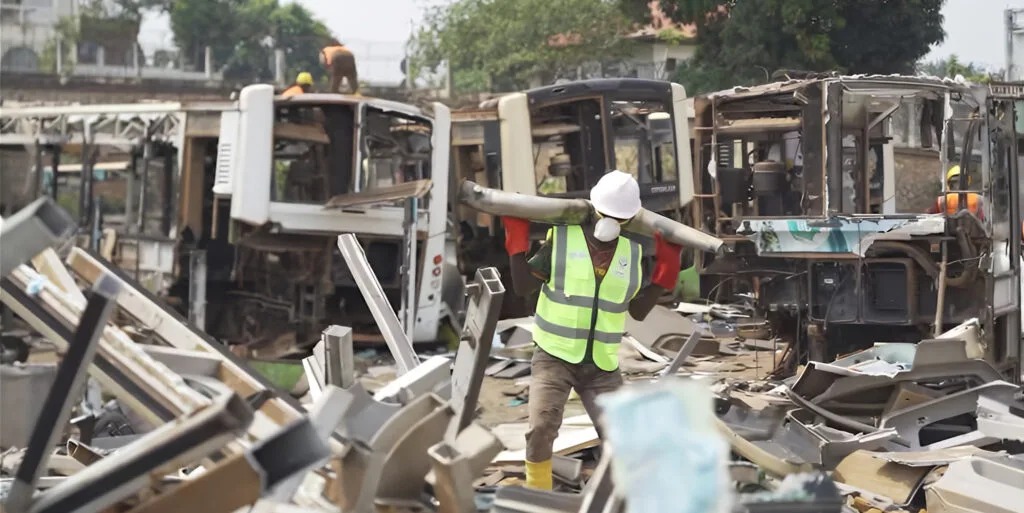
Cameroon has begun formalising its urban recycling sector after processing more than 840 tonnes of scrap metal and transitioning over 150 informal workers into structured employment in Yaoundé, in an initiative backed by the International Labour Organization that aims to improve labour safety, strengthen waste governance and convert unmanaged waste into economic value.
The programme, implemented in early 2026, rehabilitated a long-neglected scrap site and introduced new systems for tracking recyclable materials, signalling a broader policy shift toward integrating informal waste workers into regulated value chains.
The intervention focuses on Cameroon’s ferrous waste segment, where informal collection and dismantling activities have historically operated with limited oversight, inconsistent incomes and significant occupational risks.
As part of the programme, 75 end-of-life vehicles, including buses and minibuses, were dismantled in collaboration with the National Union of Scrap Metal Workers, generating nearly 30 million CFA francs in revenue over a two-week period. For workers involved in the operation, the transition to formalised processes has meant access to protective equipment, safety training and more predictable earnings.
According to the International Labour Organization, improving occupational safety and income stability within informal recycling activities is a critical step toward building resilient urban labour markets, particularly in cities where waste management systems are under strain from rapid population growth and rising consumption.
Across sub-Saharan Africa, informal waste workers play a central role in recycling and materials recovery, yet they often operate outside regulatory frameworks, limiting their access to financing, social protection and formal market opportunities.
Cameroon’s initiative also introduces new digital infrastructure intended to strengthen oversight and transparency within the recycling sector. At the centre of the reform is the National Waste Exchange, a platform that uses QR codes and real-time tracking to monitor the movement of recyclable materials from collection points to processing facilities.
Officials say the system is designed to improve transaction security, reduce material losses and provide reliable data on waste flows, which can support planning and investment decisions.
The adoption of digital tracking tools reflects a wider trend across African cities, where governments are seeking to modernise waste management systems as part of broader urban governance reforms. Reliable data on waste volumes and material recovery rates is increasingly important for municipal budgeting, infrastructure planning and compliance with environmental standards.
According to the United Nations Environment Programme, African cities are expected to generate significantly higher volumes of solid waste over the next two decades, driven by urbanisation, industrial growth and expanding consumer markets. Without improved collection and recycling systems, these trends are likely to increase pressure on landfills, raise public health risks and increase the fiscal burden on local authorities responsible for waste disposal.
Formalising the recycling sector also carries implications for industrial supply chains. Scrap metal recovered from end-of-life vehicles and construction waste can serve as a secondary raw material for manufacturing, reducing reliance on imported inputs and lowering production costs for domestic industries.
In countries with limited foreign exchange reserves, expanding local recycling capacity can help reduce import demand while supporting job creation in downstream processing activities.
From a public finance perspective, structured recycling systems can improve revenue collection through licensing, taxation and service fees, while reducing the costs associated with unmanaged waste. Informal dumping and uncontrolled burning of waste can damage infrastructure, block drainage systems and contribute to flooding, particularly in densely populated urban areas. Preventing such disruptions can lower emergency response costs and reduce long-term maintenance expenses for roads and sanitation networks.
The programme in Yaoundé illustrates how labour policy, environmental management and digital governance can converge within a single sector. By integrating informal workers into regulated operations, authorities are seeking to balance economic inclusion with environmental compliance, a challenge faced by many African governments attempting to transition toward more sustainable urban systems.
According to development agencies working in the region, gradual formalisation approaches that preserve livelihoods while improving standards are more likely to gain acceptance among workers and local communities than rapid regulatory enforcement measures.
The experience in Cameroon is likely to be closely watched by policymakers in other African cities confronting similar waste management challenges. Rapid urban expansion has increased demand for recycling services across the continent, yet investment in infrastructure and workforce development has often lagged behind.
As governments seek to build circular economy systems that recover value from waste while protecting public health, initiatives that combine worker protection, digital monitoring and market incentives are emerging as practical models for reform.
While the scale of the Yaoundé programme remains modest relative to national waste volumes, it demonstrates the operational and economic feasibility of structured recycling systems in urban African contexts.
Source: https://africasustainabilitymatters.com/


