





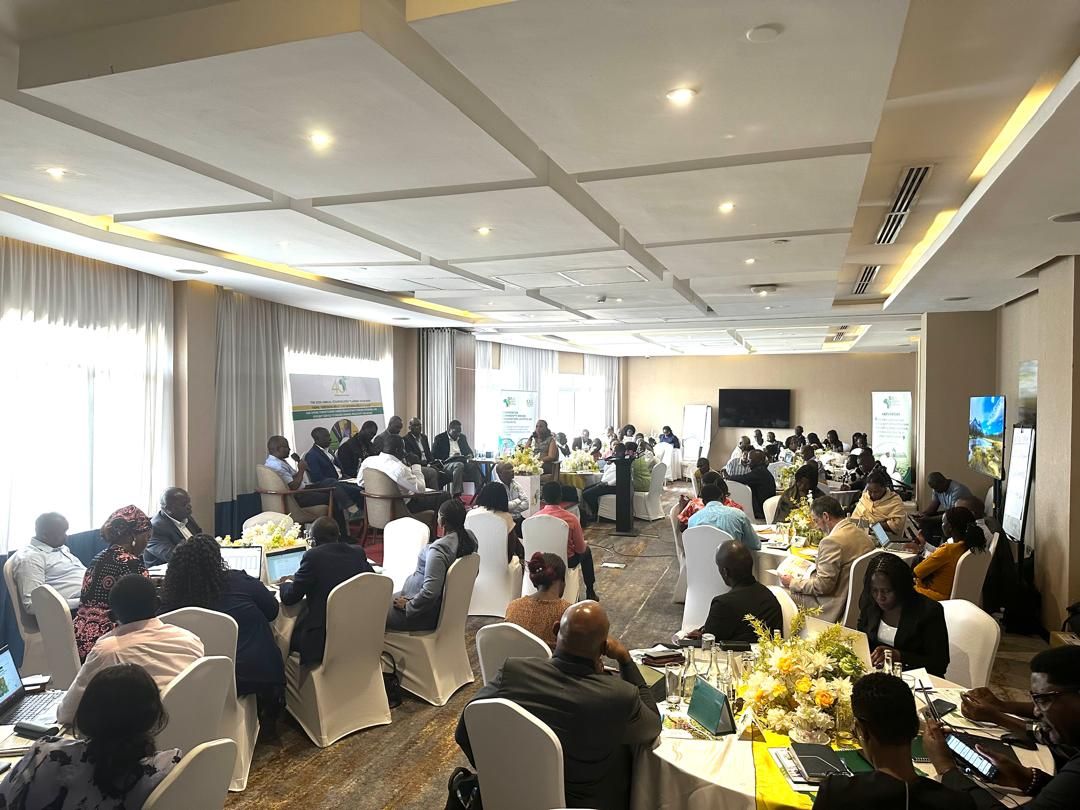
Stakeholders at the 2026 Annual Planning Workshop of the Sasakawa Africa Association (SAA) in Uganda have called for a transition from project-based agricultural interventions to long-term, system-driven approaches anchored on farmer ownership and collaboration.
The meeting brought together representatives from government ministries, research institutions, academia, farmer organisations, financial institutions, mechanisation providers and agribusinesses to address how to sustain and scale agricultural impact beyond project cycles.
Participants emphasised that agricultural transformation in Africa can no longer rely on short-term projects, but must be built on coordinated systems that integrate finance, inputs, mechanisation and market access.
This aligns with broader SAA strategy discussions across Africa, where stakeholders have increasingly advocated a shift toward system-wide transformation, with a focus on sustainability, measurable outcomes and stronger value chains.
At the Uganda workshop, discussions centred on repositioning farmers from passive beneficiaries to active owners within agricultural systems. Stakeholders identified farmer asset ownership as a key pillar for long-term sustainability, alongside behavioural change to transition smallholders from subsistence farming to enterprise-driven agriculture.
Among the priority actions highlighted were the transformation of farmer organisations into business-oriented entities, improved access to productive assets, and the integration of social and behavioural change strategies to drive mindset shifts.
Participants also stressed the need to strengthen integrated service delivery across the agricultural value chain, including access to inputs, financing, mechanisation and structured markets.
SAA’s programmes across the continent have consistently promoted multi-stakeholder collaboration and market-oriented agriculture, focusing on strengthening extension systems and linking farmers to value chains to improve productivity and incomes.
The Uganda engagement concluded with a consensus that sustainable agricultural systems will depend on whether farmers are positioned as owners rather than participants, with stakeholders aligning on the need to embed this principle in future interventions.


