




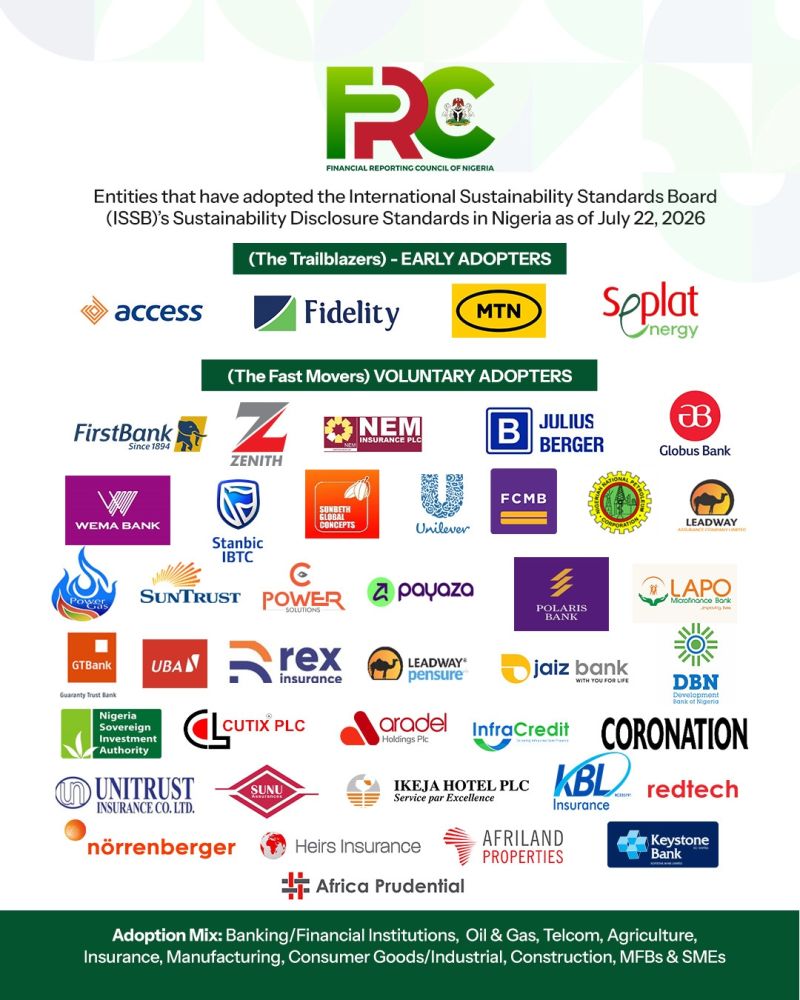
Nigeria has recorded another milestone in its sustainability journey, with more than 50 organisations voluntarily adopting the International Sustainability Standards Board (ISSB) IFRS Sustainability Disclosure Standards (IFRS S1 and IFRS S2), reinforcing the country’s commitment to globally recognised sustainability reporting.
According to the Financial Reporting Council (FRC) of Nigeria, as of July 2026, the organisations have embraced the global reporting framework to strengthen transparency, improve sustainability-related disclosures, and provide investors with consistent, decision-useful information.
The trailblazing Early Adopters of the standards are Access Holdings Plc, Fidelity Bank Plc, MTN Nigeria Communications Plc, and Seplat Energy Plc, which have taken the lead in aligning their sustainability disclosures with international best practices.
The growing list of Voluntary Adopters includes First Bank of Nigeria Limited, Zenith Bank Plc, NEM Insurance Plc, Julius Berger Nigeria Plc, Globus Bank Ltd, Wema Bank Plc, Stanbic IBTC Holdings Plc, Sunbeth Global Concepts Ltd, Unilever Nigeria Plc, FCMB Group Plc, Odu’a Investment Company Limited, Leadway Assurance Company Limited, Powersoft Integrated Solutions Ltd, SunTrust Bank Nigeria Ltd, C-Power Solutions Ltd, Payaza Africa, Polaris Bank Ltd, LAPO Microfinance Bank Ltd, Guaranty Trust Bank (GTBank), United Bank for Africa (UBA) Plc, Rex Insurance Ltd, Leadway Pensure PFA Ltd, Jaiz Bank Plc, Development Bank of Nigeria (DBN), Nigeria Sovereign Investment Authority (NSIA), Cutix Plc, Aradel Holdings Plc, InfraCredit, Coronation Group, Unitrust Insurance Company Ltd, SUNU Assurances Nigeria Plc, Ikeja Hotel Plc, KBL Insurance Ltd, Redtech Limited, Nörenberger Financial Group, Heirs Insurance Group, Afriland Properties Plc, Keystone Bank Ltd, and Africa Prudential Plc, among others.
These organisations represent a broad cross-section of Nigeria’s economy, spanning banking and financial services, oil and gas, telecommunications, agriculture, insurance, manufacturing, consumer goods, industrials, construction, microfinance, and small and medium-sized enterprises (SMEs).
The expanding adoption reflects a growing recognition among Nigerian businesses that sustainability reporting is no longer merely a compliance requirement but a strategic business tool that strengthens corporate governance, enhances investor confidence, improves transparency, and supports long-term value creation.
The FRC commended the pioneering organisations for demonstrating leadership in advancing high-quality sustainability reporting in Nigeria. According to the Council, their commitment will accelerate the country’s transition towards a more resilient, transparent, and sustainable economy while positioning Nigeria as one of Africa’s leading jurisdictions in the adoption of the ISSB’s global sustainability disclosure standards.
The Council added that the increasing adoption of IFRS S1 and IFRS S2 marks a significant step in aligning Nigeria’s corporate reporting framework with global sustainability disclosure requirements, enabling Nigerian organisations to remain competitive in international capital markets and meet the growing expectations of investors and other stakeholders.


