




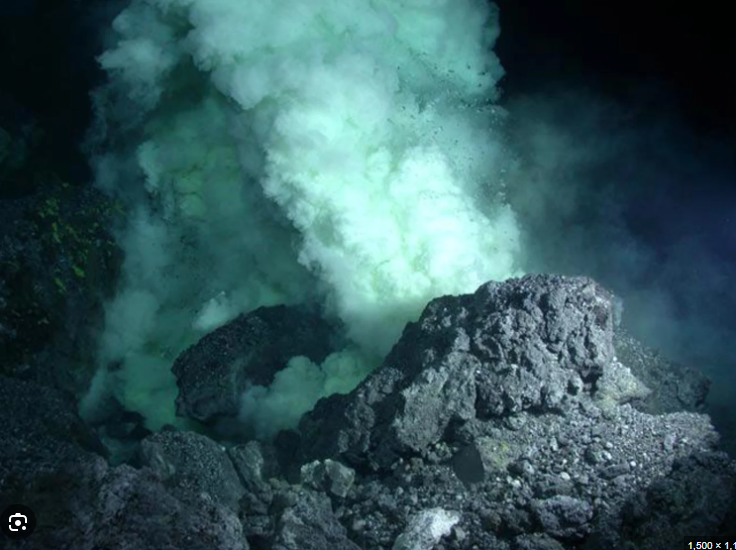
Civil society groups and residents of Bille Kingdom in Degema Local Government Area of Rivers State are calling for urgent government intervention following reports of a suspected underwater gas eruption that has persisted for weeks, raising environmental and public health concerns.
The appeal was made during an advocacy visit by Environmental Rights Action and Social Action to the Port Harcourt office of the National Oil Spill Detection and Response Agency on March 31, where stakeholders sought clarity on regulatory response efforts.
Community reports describe unusual and potentially hazardous activity across local waterways, including persistent bubbling, surface boiling, and intermittent fire outbreaks, symptoms commonly associated with subsurface gas leaks. Residents say these incidents have occurred both in rivers and near residential areas, heightening fears of escalation.
Kentebe Ebiaridor, programme manager at Environmental Rights Action, criticised what he described as a slow and opaque institutional response. According to him, engagements with regulators have yet to yield a clear timeline for containment or remediation.
The situation is further complicated by uncertainty over the source of the leak. Civil society groups argue that operators within Oil Mining Lease 18, a major hydrocarbon-producing area, should be held accountable in the absence of confirmed ownership of the affected infrastructure.
Nigeria’s upstream regulator, the Nigerian Upstream Petroleum Regulatory Commission, had earlier acknowledged the incident, confirming on March 20 that an investigation into gas bubbling in the Bille community was underway. The agency stated it was monitoring the situation and working toward a resolution, though detailed findings have yet to be made public.
Environmental advocates warn that delays in response and limited disclosure could increase risks to both ecosystems and human health. Prince Edegbuo, resource justice manager at Social Action, cautioned that prolonged exposure to gas emissions could trigger a broader public health emergency if not urgently addressed. He called on authorities to release the results of environmental tests reportedly conducted in the area, stressing the community’s right to environmental information.
The groups are also pushing for immediate contingency planning, including emergency response protocols and potential evacuation measures should conditions worsen.
Local stakeholders say the incident reflects broader systemic challenges in Nigeria’s oil-producing regions, where regulatory gaps, ageing infrastructure, and unclear liability frameworks often delay effective responses to environmental hazards.
In response, NOSDRA’s Port Harcourt zonal leadership acknowledged the concerns raised and pledged to escalate the matter to relevant authorities. However, for affected communities, the priority remains swift intervention to contain the suspected leak, restore environmental safety, and prevent further disruption to livelihoods that depend on the region’s fragile aquatic ecosystems.
The unfolding situation underscores the growing need for stronger environmental governance, transparency, and rapid-response mechanisms in resource-rich but ecologically vulnerable regions.


