




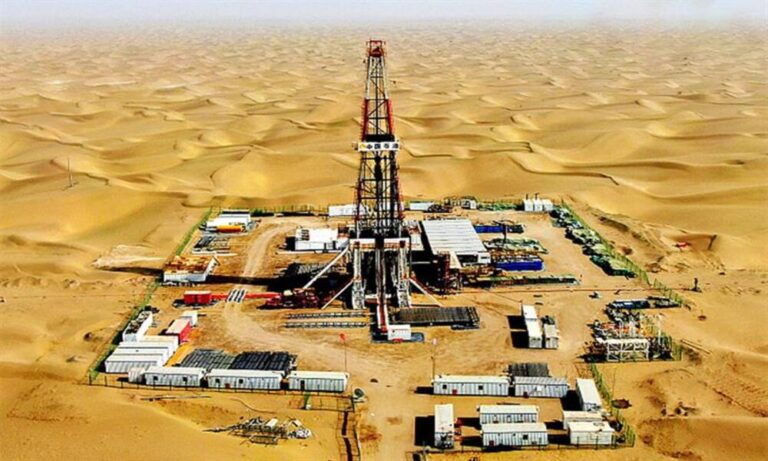
Egypt is intensifying efforts to stabilize and expand its oil production capacity after state-owned Egyptian General Petroleum Corporation (EGPC) signed a $208 million agreement with Cheiron Petroleum and British energy company Capricorn Energy to strengthen exploration and production activities in the country’s Western Desert.
The five-year agreement, approved on May 19, reflects Cairo’s broader strategy to revive mature oil fields, attract foreign investment and reinforce national energy security amid growing regional and global energy market volatility. The project will focus on the Badr El-Din area, one of Egypt’s most important oil-producing regions, through a combination of new drilling campaigns, infrastructure upgrades and advanced geological exploration.
Under the agreement, the partners plan to drill 44 new wells while consolidating eight existing concessions currently operated by the Badr El Din Petroleum Company, a joint venture between EGPC and Shell, into a single operational block. The newly reorganized concession area will span approximately 6,181 square kilometers, creating a more integrated framework for exploration, production and asset management.
Egyptian authorities believe the restructuring could significantly improve operational efficiency by reducing the fragmentation associated with older concession agreements that previously slowed investment decisions and complicated drilling activities. Industry experts say the consolidation model may also help optimize production planning and improve coordination between exploration and field development activities.
The Western Desert has remained Egypt’s primary oil-producing basin for more than a decade and plays a critical role in maintaining domestic energy supplies. However, like many mature oil regions globally, production in several fields has gradually declined as reserves age and extraction becomes more technically complex.
To address these challenges, the new agreement places strong emphasis on improving recovery rates in mature fields through advanced extraction technologies and enhanced geological analysis. Rather than relying solely on major new discoveries, the strategy focuses on maximizing output from existing reservoirs while identifying smaller untapped reserves that can still contribute meaningfully to production growth.
A major component of the project involves significant infrastructure modernization. The Badr-3 processing platform will undergo upgrades designed to handle higher production volumes and improve operational reliability. Existing seismic data will also be reprocessed using newer analytical technologies, while a new 500-square-kilometer 3D seismic survey will be conducted to improve geological mapping and identify additional drilling opportunities.
Energy analysts say the use of advanced seismic imaging and digital reservoir modeling has become increasingly important for mature oil-producing countries seeking to extend field lifespans and improve extraction efficiency. In Egypt’s case, authorities hope such technologies will help slow production declines that have affected the sector in recent years.
The deal also highlights Egypt’s continued reliance on partnerships with international and regional energy companies to secure financing, technical expertise and operational capacity. While EGPC remains central to the country’s oil sector, collaboration with foreign investors has become increasingly important as the government seeks to modernize infrastructure and attract capital into aging fields.
Cheiron Petroleum has emerged as one of the region’s most active independent energy operators, while Capricorn Energy brings international technical experience and exploration expertise. Egyptian officials view such partnerships as critical for maintaining investment flows into the energy sector at a time when many global investors are becoming more selective about hydrocarbon projects amid the global energy transition.
The agreement comes as Egypt continues broader energy-sector reforms aimed at improving the profitability and competitiveness of upstream oil and gas operations. Over the past several years, Cairo has introduced regulatory adjustments, revised concession frameworks and promoted investment-friendly policies intended to encourage exploration activity and stabilize domestic production.
For Egypt, sustaining oil production remains economically and strategically important. Although the country has increasingly positioned itself as a regional natural gas hub following major offshore gas discoveries such as Zohr, crude oil production still plays a significant role in export earnings, industrial supply chains and domestic energy security.
The success of the Badr El-Din program will depend largely on the speed of implementation, the productivity of the new wells and the partners’ ability to convert exploration investments into commercially viable reserves. Analysts also note that regulatory consistency and efficient coordination between public institutions and private operators will be essential to achieving the project’s long-term objectives.
As global energy markets continue to experience geopolitical uncertainty and supply volatility, Egypt’s push to strengthen domestic oil production reflects a wider regional effort among energy-producing countries to balance investment, energy security and economic resilience in an increasingly complex global energy landscape.
Source: https://africasustainabilitymatters.com/


