




Behind many small shops across Nigeria are women whose daily responsibilities extend far beyond selling goods. They are business owners, mothers, caregivers and, in many cases, major contributors to their households’ finances. Every day, they decide what to stock, how to manage limited resources and how to keep their businesses running despite rising costs and uncertain sales.
For these women, business growth is not simply about increasing revenue. It can mean paying children’s school fees, meeting household needs and gaining greater financial independence. Yet the determination to succeed is often confronted by limited capital, inadequate business knowledge and insufficient support to expand.
It is against this background that Nestlé Nigeria’s Empowering Rural Women Initiative has sought to strengthen women-led businesses, combining product support with practical training and mentorship.
More Than Financial Assistance
The initiative began in August 2021 with 50 female retailers in the suburbs of Abuja. It was built to address a specific problem: rural women retailers who were not growing as consistently as others. By mid-2025, it had expanded to nine locations across the country.
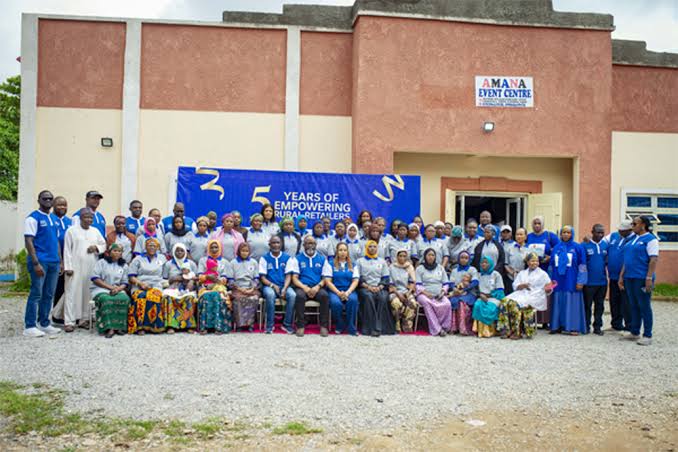
At its fifth anniversary and 10th edition in August 2026, it welcomed another 50 women retailers in Zaria, bringing the cumulative number of beneficiaries to 482. The Zaria edition was delivered with the support of Nestlé Nigeria’s implementation partners and local distributors.
Participants receive product grants valued at three times their existing stock, alongside training in bookkeeping, merchandising, stock management, financial management and customer service. A three-month mentorship programme helps them apply what they learn to their daily operations.
The combination matters. Additional stock provides an immediate opportunity to improve sales, while the training helps participants manage their resources, keep proper records and make informed decisions. Monitoring of earlier cohorts showed that more than 80 per cent had sustained and grown their businesses beyond their initial stock support.
In Their Words
The stories come from different parts of the country, and the hopes sound alike.
In Akpabuyo, Cross River State, Favour Effiong, owner of Favour Stores, described the support as an investment in her business and her family.
“This training and the grant I have received will help my family. I cannot thank Nestlé enough for this investment in my business. Thank you, Nestlé.”
For Aminat Kolawole, owner of Idera Oluwa Stores in Sagamu, Ogun State, the opportunity is closely connected to her aspirations for her children’s future.
“I believe that this opportunity will provide the necessary knowledge and resources to grow my business so I can earn more money to support my family and cater for my children’s education.”
Her experience reflects a reality shared by many women entrepreneurs: the success of a small business can influence the opportunities available to an entire household.
Folasade Ogunjimi of Save Way Stores, also in Sagamu, described the initiative as an unusual but welcome experience in her 25 years in retail.
“This is the first time a company is bringing this amazing initiative to retailers in Sagamu in my 25 years of running this business. We sincerely appreciate this well planned and considerate gesture by Nestlé towards supporting and expanding our businesses.”
For Bukola Ajala, it is the possibility of taking her business to a new level. “I have not seen any empowerment like this before. I know I am going to the next level.”
When Business Growth Becomes Family Progress
Programme-reported beneficiary outcomes point in the same direction. In Port Harcourt, Oghenetega Delight Jombo, owner of Jombo Stores, reportedly recorded 675 per cent business growth within six months, with monthly turnover exceeding ₦547,623.67.
Improved business performance can strengthen household finances, support children’s education and give women greater capacity to plan for their families.
Women-led small businesses play an important role in local economies. They provide goods and services within communities, sustain household incomes and create opportunities for other people through their business activities. But the ability to maintain and grow them depends on more than determination. Access to capital, relevant business skills, mentorship and supportive networks can decide whether a woman moves beyond daily survival towards long-term stability. Nestlé Nigeria’s approach recognises these linked needs: product grants answer the immediate need for stock, while training and mentorship give her the knowledge to keep the business viable.
Will It Last?
The real test is whether the gains last once the three-month mentorship ends and the grant stock has been sold. The reported results among earlier participants suggest that many do. The numbers are still modest set against the need: 482 women over five years. But they point to a model worth copying, which is to invest in the women who already sit in a company’s supply chain and to train them as well as supply them.
The company is open about its own interest in the answer. Boladale Odunlami, Commercial Manager at Nestlé Nigeria, said women account for about 60 per cent of retailers in the company’s retail network, and that the women who help the company grow should have the “opportunity to grow with us.”
That is a fair standard. The value of the initiative lies in the shops that stay open, the incomes that rise and the children who stay in school.
One Fee, Paid on Time
Ultimately, empowering women in business means recognising the economic value of what they already do and providing the support that can help them do it better.
Blessing Abayi, a single mother from Bauchi, reportedly became able to pay her children’s school fees in full and on time after three months in the programme, following an improvement in her business. The numbers will say how many women were reached. They cannot say what that moment meant.
Behind every growing shop is a woman making decisions, taking risks and working towards a better future. When her business becomes stronger, the benefits can reach far beyond the shop counter.


