




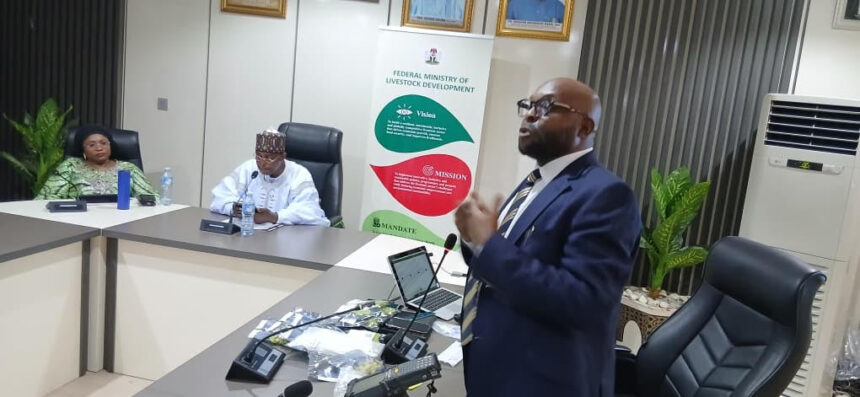
The Federal Government has entered into a strategic partnership with Nestlé Nigeria Plc to establish a dairy technical skills development centre in the Federal Capital Territory, aimed at strengthening local capacity and reducing Nigeria’s reliance on dairy imports.
The agreement, formalised through a memorandum of understanding, is designed to address structural challenges in the dairy sector, including low productivity and weak value chain integration.
Minister of Livestock Development, Idi Mukhtar Maiha, said the initiative targets inefficiencies that have limited output despite Nigeria’s large livestock population.
He noted that average milk yield remains between one and two litres per cow daily under traditional systems, significantly below global benchmarks, due to poor husbandry practices, inadequate feed systems, limited water access, climate pressures and low adoption of modern technologies.
According to the minister, these constraints have contributed to a supply gap that drives Nigeria’s dairy import bill to about $1.5 billion annually.
Maiha said the new centre will operate as a practical training hub, with a curriculum comprising 70 per cent hands-on training and 30 per cent classroom instruction, aligned with international dairy standards.
The programme is expected to build skills across the dairy value chain, including breeding, calf management, feed optimisation, milk hygiene and processing, with the goal of improving productivity and supporting commercially viable dairy operations.
Managing Director and Chief Executive Officer of Nestlé Nigeria, Wassim Elhusseini, said the initiative forms part of the company’s long-term investment in local sourcing and supply chain development.
He disclosed that the company has invested over ₦1.8 billion in dairy cluster development, resulting in improved farmer incomes and increased production.
According to him, participating farmers have recorded income growth from about ₦70,000 to ₦250,000 monthly between 2021 and 2024, while organised cooperatives have aggregated more than one million litres of raw milk.
He added that over 2,000 pastoralists have been trained, more than 36,000 cattle vaccinated, and key infrastructure such as boreholes, milk collection centres and cooling systems deployed to enhance quality and reduce post-harvest losses.
Elhusseini said pilot interventions, including a demonstration farm launched in 2025, have shown that improved breeding and feeding practices can increase milk yield from one litre to as much as 10 litres per cow daily.
Permanent Secretary at the Federal Ministry of Livestock Development, Chinyere Ijeoma Akujobi, said the initiative’s impact will be measured by improved farmer incomes, better nutrition outcomes and expansion of viable dairy enterprises.
Stakeholders said the partnership aligns with the National Dairy Policy under Nigeria’s development framework, which prioritises local capacity building, private sector participation and import substitution.
Industry analysts noted that the initiative could enhance productivity across the dairy value chain, reduce foreign exchange pressures from imports and support broader efforts to position agriculture as a more investable sector through public-private partnerships.


