




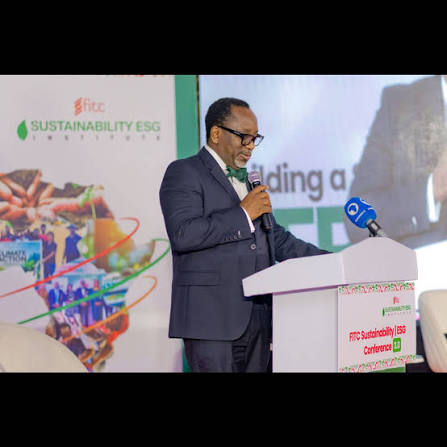
The Chairman of the Advisory Board of the FITC Sustainability & ESG Institute, Prof. Fabian Ajogwu (SAN) has called for Africa to move beyond adopting global Environmental, Social and Governance (ESG) standards and begin taking an active role in shaping frameworks that reflect the continent’s unique economic, social and environmental realities.
Speaking at this year’s FITC Sustainability and ESG Conference held recently in Lagos under the theme, ‘Building a Sustainable Africa: Integrating Environmental Stewardship, Social Investment, and Strong Governance for a Prosperous Future’ Prof. Fabian Ajogwu (SAN) while delivering his opening address described climate action as both a leadership responsibility and an economic necessity.
According to him, Africa should position itself as a standard-setter rather than merely an adopter of frameworks developed primarily within developed economies.
Currently, globally recognised sustainability reporting frameworks such as the Global Reporting Initiative (GRI), Task Force on Climate-related Financial Disclosures (TCFD) and International Sustainability Standards Board (ISSB) standards play significant roles in guiding corporate ESG reporting and helping businesses meet investor and regulatory expectations.
However, while these frameworks remain important for African businesses seeking access to global capital and markets, concerns persist about their ability to fully capture the realities and sustainability priorities of the continent.
Ajogwu said, “Governments, businesses and institutions must integrate sustainability into national development strategies and corporate governance because protecting Africa’s natural capital is essential to building resilient economies and securing long-term prosperity.”
He also highlighted the growing need for African researchers, regulators, financial institutions and sustainability professionals to participate more actively in global standard-setting processes.
In Nigeria, institutions such as the Financial Reporting Council of Nigeria, Nigerian Exchange Group and capacity-building organisations including FITC have an opportunity to contribute to Africa-focused sustainability research and strengthen the continent’s representation in international ESG discussions.
Delivering the keynote address, the Chairman of the MTN Foundation, Mosun Belo-Olusoga, urged African leaders to treat sustainability and ESG as strategic drivers of competitiveness, responsible leadership and inclusive prosperity.
Belo-Olusoga said, “Organisations embedding environmental stewardship, social investment and strong governance into their business models will be better positioned to attract investment, build public trust and create lasting value for society.”
The Director-General of the Securities and Exchange Commission, Dr Emomotimi Agama, also urged Nigerian companies to improve sustainability disclosures to remain attractive to global investors.
Agama said, “Investors increasingly prioritise ESG performance when making investment decisions, while transparent sustainability reporting has become a strategic business imperative for enhancing investor confidence, strengthening governance and improving corporate competitiveness.”
The conference featured a flagship plenary titled, ‘From Commitment to Action: Building a Sustainable Africa Through Leadership, Investment and Accountability’, where industry leaders discussed practical steps for translating sustainability commitments into measurable outcomes.
Participants at the governance plenary also stressed that ESG should no longer be treated merely as a compliance requirement but as a strategic tool for competitiveness, resilience and long-term value creation.
The environmental stewardship session identified renewable energy, climate resilience, green industrialisation and the circular economy as opportunities for economic growth, while calling for stronger climate policies and increased investment in green infrastructure.
The social investment session advocated greater investment in education, healthcare, youth development, financial inclusion, digital transformation, and women’s economic empowerment.


