




A technical skill can change the direction of a young person’s life. For one graduate, it could be the knowledge needed to operate sophisticated manufacturing equipment. For another, it could be the business skills to turn a modest street-vending opportunity into a sustainable enterprise. What both need is an opportunity to put their abilities to work.
In Nigeria, the transition from education to employment remains a major hurdle for many young people. Academic qualifications do not always translate into workplace readiness, while limited access to practical training, mentorship, start-up support and professional exposure can make it difficult to establish a career or business. Closing this gap requires more than preparing young people for opportunities; it requires creating pathways through which they can access and sustain them.
Recognising this challenge, Nestlé Nigeria has developed initiatives aimed at equipping young people with relevant skills, supporting entrepreneurship and improving their access to economic opportunities. Through its Technical Training Programme, My Own Business (MYOWBU) and Nesternship, the company is addressing different stages of the journey from learning to earning. All three sit under Nestlé Needs YOUth, a global initiative that targets 10 million young people worldwide by 2030.
Beyond the number of participants reached, the experiences of beneficiaries and company leaders offer a closer look at how these opportunities are shaping young people’s careers and livelihoods.
Turning Technical Training into Employment
For young people interested in engineering and manufacturing, acquiring theoretical knowledge is only one part of preparing for the workplace. Practical experience and the ability to apply technical skills are equally important.
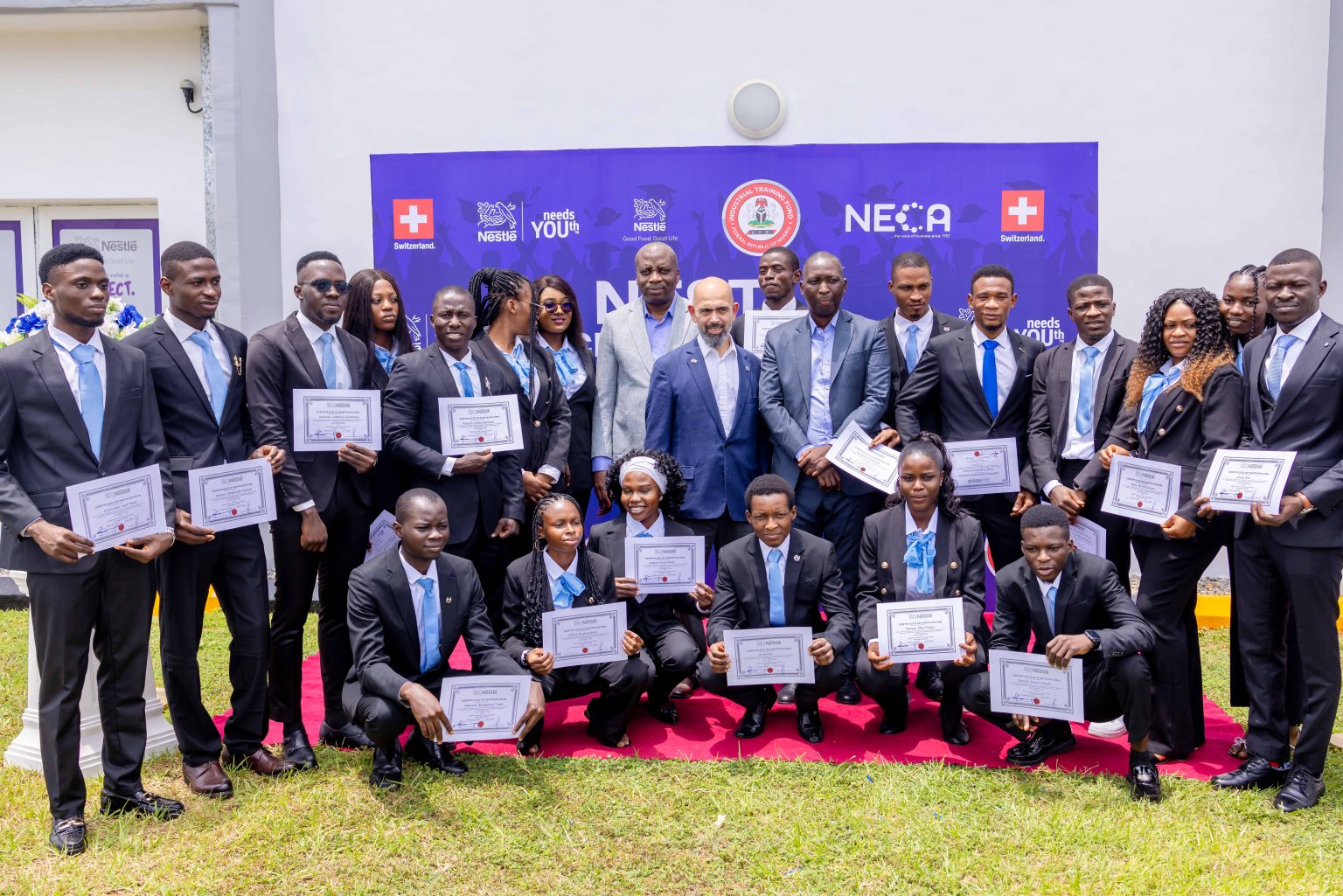
Nestlé Nigeria’s Technical Training Programme was introduced in 2011 under its youth development efforts. Delivered through centres in Agbara, Abaji and Flowergate, it provides an 18-month curriculum combining classroom instruction with hands-on factory experience, leading to City & Guilds London technician certifications. It is implemented with the Nigeria Employers’ Consultative Association (NECA), the Industrial Training Fund (ITF) and the Swiss Embassy.
The programme reached a milestone in April 2026. At the graduation of 20 trainees from the Flowergate centre, Nestlé marked 15 years of the initiative, having equipped 309 young Nigerians across its three locations, with more than N6 billion invested. According to the 2025 Annual Report, 60 students graduated across the three centres during that year, and 98 per cent of graduates had secured employment at Nestlé Nigeria.
Managing Director Wassim Elhusseini said this “pipeline of talent” has strengthened the company’s operations and created opportunities for young Nigerians. Country Human Resource Manager Shakiru Lawal called the centre “a talent pipeline for our business and the wider manufacturing sector.”
The company is open about its own interest. A training centre that feeds its talent pipeline also gives the business skilled workers, which is part of why it can keep going. It also raises a fair question. A 98 per cent employment rate is impressive, but it depends on the company having jobs to offer. And as a BusinessDay commentary pointed out, training 309 people in 15 years is “a drop in the ocean” against the millions entering Nigeria’s labour market each year. The challenge, it said, is replication.
For the young people inside the programme, the value is plain. Speaking for his fellow graduates at the April ceremony, valedictorian Samuel Oladokun said: “This training has gone far beyond building our technical skills.” He said it had also built their discipline, confidence and professionalism for demanding industrial environments.
From Pushcarts to Business Ownership
Not every young person will follow the traditional route into formal employment. For others, entrepreneurship offers an opportunity to earn an income, develop business skills and build a livelihood.
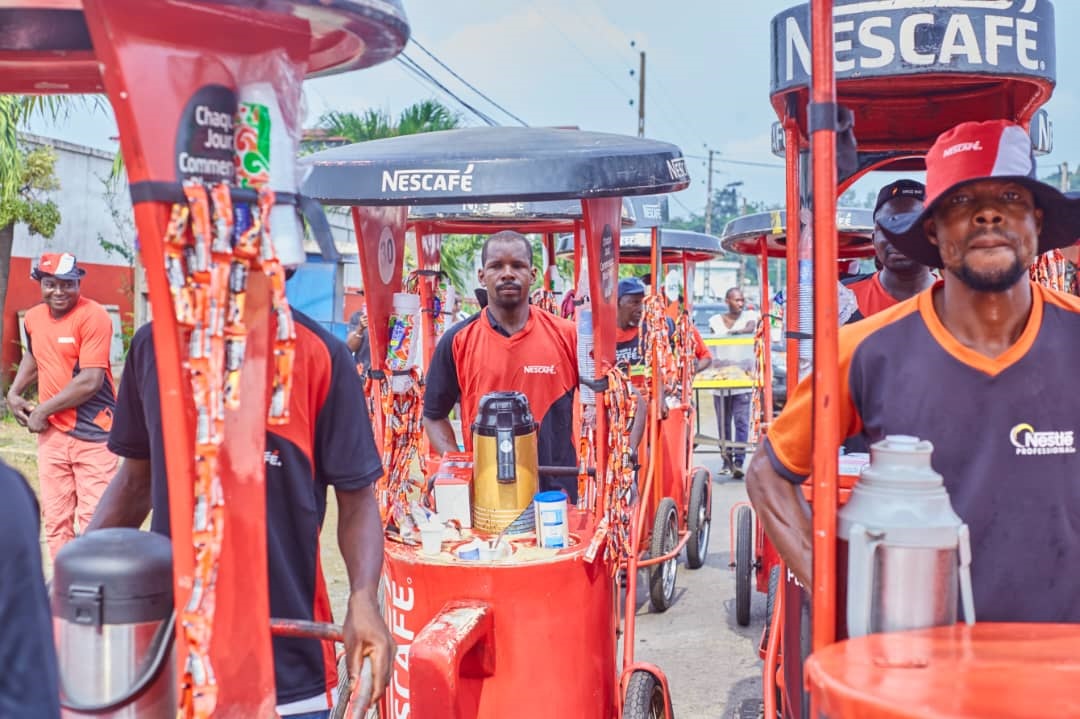
Nestlé Professional’s My Own Business (MYOWBU) initiative supports young people interested in the food and beverage vending business. Participants receive branded pushcarts and shoulder kits, creating an entry point into street vending and small-scale enterprise.
The support also extends to business development. In May 2025, Nestlé Professional trained over 300 operators and attendants in Lagos, in areas including business management, hygiene, food safety, waste management and customer service. The initiative has reportedly created more than 1,500 employment opportunities.
Funmi Osineye, Business Manager at Nestlé Professional, said the workshop was about more than technical skills. It was about “building confidence, nurturing ambition” and strengthening a community of young business leaders. The Nigeria Employers’ Consultative Association has also recognised the initiative as a model of private-sector-led skills development.
The people show what that means. Adeosun Michael, recognised as the longest-serving MYOWBU operator after 20 years, said: “MYOWBU transformed my life. I was able to leave the streets, build a home, and provide for my family.”
Workplace Exposure
Beyond technical education and entrepreneurship, access to workplace experience remains an important part of preparing young people for professional life.
Nestlé’s Nesternship is a regional internship programme for Central and West Africa. Applications for the 2026 edition opened in April 2026, with a closing date of June 12. Participants are placed across functions including marketing and sales, finance, human resources, supply chain, information technology and engineering, with a stipend and mentorship. Nestlé describes it as its first regional and mainly virtual internship programme.
Lawal said the company’s youth work is built on a simple principle: unlocking potential through access to skills, opportunity and real-world experience. For participants, such experiences can help bridge the gap between academic learning and the expectations of professional environments.
A Platform for Young Entrepreneurs
Skills and starter kits need an ecosystem around them. In June 2026, at the National Youth Entrepreneurship and Empowerment Programme (YEEP) in Abuja, Nestlé Nigeria reaffirmed an eight-year partnership with Activate Success International Foundation.
Victoria Uwadoka, who then led Nestlé Nigeria’s corporate communications, public affairs and sustainability work, said platforms like YEEP matter in a country where over 70 per cent of the population are young, helping young people turn their “talents into enterprise.” At the summit, 149 young entrepreneurs received grants and tools worth over ₦72 million from the organisers and other partners.
The foundation’s founder, Love Idoko-Uloko, put the challenge in terms that apply to every programme above. She said the country’s greatest problem is not a shortage of talent but the absence of adequate structures to turn it into results.
What Opportunity Makes Possible
What connects these experiences is the importance of access. A young person may have the interest to pursue engineering but require structured technical training to become employable. Another may be willing to start a business but need equipment, guidance and the knowledge to manage it. For someone entering the corporate world, workplace exposure can provide an important first step.
However, the wider challenge remains significant. Corporate programmes alone cannot resolve Nigeria’s youth unemployment and skills-development challenges. Sustained progress also requires strong educational institutions, industry collaboration, access to finance, broader job creation and opportunities that can reach young people across different backgrounds and locations.
This makes the question of long-term impact particularly important. Beyond the number of young people trained or enrolled, the real measure of youth empowerment is whether participants can secure meaningful employment, sustain viable businesses and improve their economic prospects.
For Joseph Abraham, the answer is already visible. He started as a pushcart operator and has since progressed into distribution. “I started as a pushcart operator. Today, I’m running my own Nestlé distribution business thanks to the foundation Nestlé helped me build. Dreams do come true.”
Ultimately, youth empowerment is not simply about preparing young people for the future. It is about creating opportunities that allow them to participate meaningfully in the present and build the future they aspire to.


