




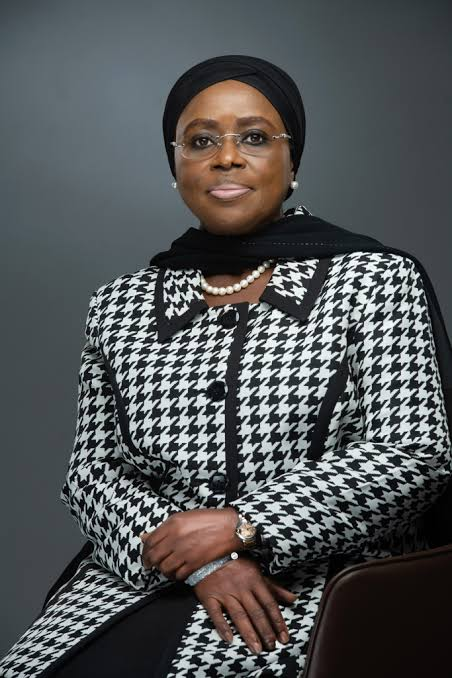
Chairman of MTN Foundation, Mrs. Mosun Belo-Olusoga, has challenged governments, businesses, financial institutions and policymakers across Africa to move beyond treating Environmental, Social and Governance (ESG) as a compliance exercise and instead embrace it as a framework for building long-term prosperity, resilience and inclusive growth across the continent.
Delivering the keynote address at the 2026 FITC Sustainability & ESG Conference held at the Lagos Oriental Hotel, Victoria Island, Lagos, Belo-Olusoga said the conversation around sustainability has changed significantly in recent years, with investors, regulators and consumers placing greater emphasis on how organisations manage environmental risks, social impact and governance practices.
According to her, Sustainability and ESG have evolved from corporate responsibility initiatives into strategic imperatives that now influence investment decisions, institutional resilience and economic competitiveness.
“We are no longer debating whether Sustainability and ESG matter,” she said. “The real question is whether Africa will seize Sustainability and ESG as catalysts for prosperity, competitiveness and inclusive growth.”
Speaking on the theme, Building a Sustainable Africa: Integrating Environmental Stewardship, Social Investment, and Strong Governance for a Prosperous Future, Belo-Olusoga noted that the world is undergoing one of the biggest economic transitions in modern history as climate change, technology, changing consumer expectations and evolving investor priorities continue to reshape global markets.
According to her, businesses are increasingly being evaluated beyond their financial performance.
“The questions investors ask today are fundamentally different from those they asked a decade ago,” she said.
“They no longer ask only, ‘Is this business profitable?’ They also ask, ‘Is it resilient? Is it well governed? Can it manage environmental and social risks? Will it continue to create value ten or twenty years from now?’”
She explained that these questions demonstrate that Sustainability and ESG are no longer environmental conversations alone but have become economic, investment and leadership issues capable of determining the future competitiveness of both organisations and nations.
Turning to Africa, Belo-Olusoga observed that although the continent contributes the least to global carbon emissions, it continues to bear a disproportionate share of climate-related risks. At the same time, she said Africa possesses enormous advantages, including abundant renewable energy resources, rich biodiversity, critical minerals required for the global energy transition and the world’s youngest population.
These realities, she argued, present both responsibility and opportunity.
According to her, environmental stewardship protects the ecosystems that support agriculture, water security, energy production and livelihoods, while social investment strengthens Africa’s greatest competitive advantage, its people.
She stressed that investments in education, healthcare, financial inclusion, entrepreneurship, digital skills and gender equality should not be viewed merely as social interventions but as long-term economic investments capable of strengthening Africa’s competitiveness.
Strong governance, she added, remains the foundation upon which sustainable development depends, helping to build investor confidence, strengthen institutions, improve policy certainty and promote accountability.
“When these three pillars work together,” she said, “Sustainability and ESG become more than reporting frameworks. They become Africa’s strategy for building prosperity.”
Belo-Olusoga maintained that Africa’s future would not be determined solely by its natural resources but by the quality of leadership and institutions responsible for managing them.
“For decades, the world has described Africa as the continent of immense potential,” she said. “Potential, however, does not create prosperity. Leadership does.”
She continued: “Natural resources do not automatically generate development. Strong institutions do.”
She also noted that Africa’s youthful population would only become a demographic advantage through sustained investment in human capital.
“A youthful population does not automatically become a demographic dividend. Investment in human capital does.”
Beyond identifying the continent’s opportunities, Belo-Olusoga outlined four leadership shifts she believes are essential for building a sustainable Africa.
The first, she said, is moving away from short-term performance towards long-term value creation by balancing immediate financial results with investments that strengthen resilience and innovation.
The second is replacing traditional philanthropy with strategic social investment, where communities become partners in creating shared value rather than passive beneficiaries of corporate success.
She also urged organisations to move beyond regulatory compliance and embrace responsible leadership by embedding Sustainability and ESG into organisational culture, governance and decision-making.
“Sustainability should not be driven by regulation alone,” she said. “It must be embedded in organisational purpose, culture and governance.”
Finally, she called for stronger collaboration among governments, businesses, financial institutions, development partners and civil society, noting that sustainable development requires collective action.
“No single institution can build a sustainable Africa,” she said. “Together, we can.”
Looking ahead, Belo-Olusoga proposed five priorities that should shape Africa’s Sustainability and ESG agenda over the coming decade.
She urged organisations to integrate Sustainability and ESG into corporate strategy, boardroom decisions and capital allocation rather than treating them as reporting obligations.
She also advocated greater investment in education, healthcare, entrepreneurship, women’s economic participation and skills development, describing human capital as Africa’s greatest strategic asset.
In addition, she called for increased mobilisation of sustainable finance through pension funds, green bonds, blended finance and domestic capital markets to support renewable energy, infrastructure and climate resilience projects.
She emphasised the need to strengthen institutions through accountability and responsible leadership while encouraging greater collaboration across sectors to unlock opportunities in renewable energy, climate-smart agriculture, artificial intelligence and financial innovation.
As the keynote drew to a close, Belo-Olusoga said Africa’s greatest challenge is no longer a shortage of ideas but the ability to execute them effectively.
“The defining challenge before Africa is not a shortage of vision,” she said. “It is more of execution.”
She urged governments to create enabling policies that reward responsible investment, boards to embed Sustainability and ESG into long-term strategy, financial institutions to develop innovative financing mechanisms and educational institutions to prepare young Africans for the jobs of tomorrow.
Leaving participants with a final challenge, she encouraged every organisation represented at the conference to make measurable commitments capable of strengthening Africa’s future.
“The future of Africa will not be secured by ambition alone,” she concluded. “It will be secured by leadership.”


