




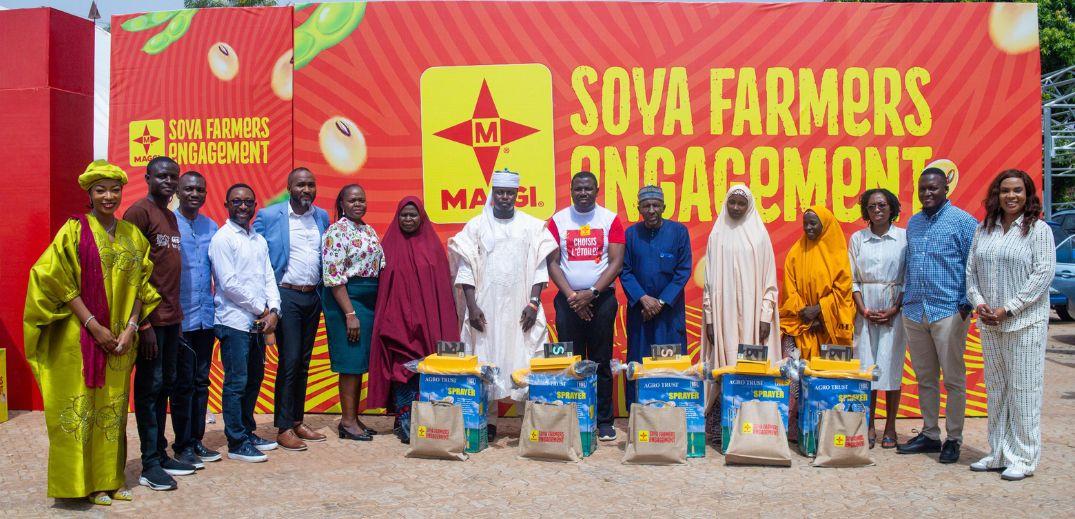
For Engineer Lawan Abdul, the difference between an ordinary farming season and a successful one became clear when he began applying regenerative agricultural practices on his soybean farm. After receiving training through a MAGGI-supported initiative, he recorded a 100 per cent increase in yield.
“Since I started adopting these strategies, as we were taught in this project, my yields have increased by 100%. This was very encouraging, and I would like to applaud the project organizers and thank MAGGI for bringing this to us,” he said.
For Saadatu Sani and her husband, the struggle was not a lack of commitment. After five years of farming without earning enough to justify their efforts, their participation in the Sorghum and Millet in the Sahel (SMS) Project brought a change. According to an account published by BusinessDay, their yield rose from less than one tonne per hectare to more than two tonnes within a year. Access to a reliable market also reduced the uncertainty of finding buyers after harvest.
Another beneficiary, Ibrahim Suleiman, described the difference market access had made: “We no longer have to suffer in the open market before we sell or produce.”
The challenge extends beyond crop farming. At Paikon Kore in the Federal Capital Territory, pastoralist communities are being introduced to improved dairy practices and infrastructure. Speaking on behalf of the community’s Apex Union Leaders at the launch of a dairy demonstration farm in 2025, Sulaiman Ahmed welcomed access to improved cattle breeds and practical training in modern dairy farming, particularly feeding methods. He also highlighted the opportunity to attract business partners.
These experiences point to a common need across agriculture: farmers require the knowledge, infrastructure and market connections that can turn their labour into sustainable livelihoods.
Strengthening Farms and Supply Chains
Nestlé Nigeria’s agricultural interventions are built around the connection between local production and stronger supply chains. Through farmer training, regenerative practices and market linkages, the company seeks to improve the quality and availability of locally sourced agricultural materials while supporting the people who produce them.
One intervention began in 2023, when MAGGI introduced a regenerative agriculture pilot backed by an investment of more than ₦100 million. The initiative supported 1,030 soybean farmers with training on practices designed to improve soil health and productivity.
Implemented with TechnoServe and IDH, with technical guidance from Ghana’s Centre for No-Till Agriculture, the programme introduced practices including cover cropping, minimal tillage, crop rotation and hedgerows.
Nestlé and the Alliance for a Green Revolution in Africa (AGRA) subsequently supported an expanded programme targeting 25,000 smallholder farmers and annual production of at least 80,000 metric tonnes of quality grains.
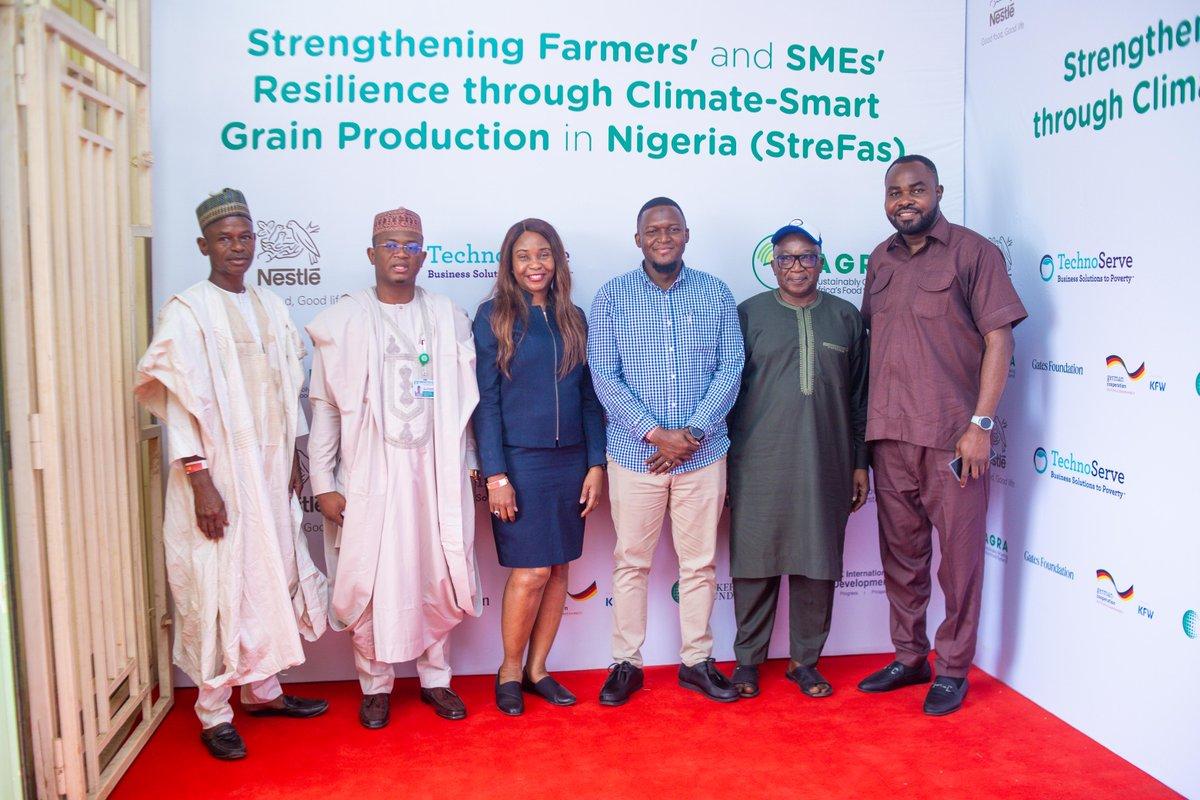
A key part of this expansion is the Strengthening Farmers’ and SMEs’ Resilience through Climate-Smart Grain Production and Accessing Structured Markets (StreFaS) programme. Running from June 2024 to October 2027, it is funded by Nestlé and AGRA and implemented with TechnoServe. The programme focuses on maize, soybean, rice and sorghum farmers in Kaduna and Nasarawa states, combining climate-smart farming methods with improved access to structured markets.
TechnoServe reported that 12,373 farmers had been engaged, with young people accounting for 40 per cent. The programme had also established 270 demonstration farms, supported regenerative agriculture across 1,853 hectares and aggregated more than 74,223 metric tonnes of produce.
Separately, Nestlé Nigeria’s 2025 Annual Report recorded that 13,621 farmers had received training in regenerative agriculture and Good Agricultural Practices. It also reported more than 4,000 regenerative agriculture farms cultivated and 335 hectares of demonstration plots and farms established. These are separate reporting measures and should not be read as a single programme tally.
Connecting Harvests to Markets
A successful harvest is only part of the equation. Produce must be stored, handled and sold without losing quality or value. Without dependable buyers, farmers may struggle to earn a fair return.
Market access is therefore a central component of StreFaS. By connecting farmers with aggregators and formal buyers, including Nestlé and other large-scale purchasers, the programme seeks to make farming more commercially viable.
Soybean, maize and sorghum are important agricultural inputs for products such as MAGGI, MILO, CERELAC and GOLDEN MORN. Improving local production can strengthen the company’s supply of raw materials while creating opportunities for farmers to participate in established value chains.
Quality is equally important. Nestlé’s Grains Quality Improvement Project, introduced in 2008 in Nigeria and Ghana, focuses on improving grain quality and safety, including post-harvest handling and the prevention of mycotoxin contamination.
According to the company’s 2025 Annual Report, 228 women grain sorters and 25 warehouse and quality assurance personnel working with suppliers received post-harvest food safety training. The company also reported that 3,407 metric tonnes of grains produced through regenerative agriculture practices had been delivered to its factory.
Developing Local Dairy Production
Nestlé Nigeria’s agricultural work also extends to dairy farming, where local production has been constrained by low milk yields, inadequate feed, animal health challenges and limited infrastructure.
Through its Livestock Development Project, the company works with CBI Innovations Limited and 2Scale, with support from the Federal Capital Territory Administration, to improve dairy production and pastoralist livelihoods.
A central component is the dairy demonstration farm at Paikon Kore, launched in February 2025. The facility demonstrates improved cattle breeding, feeding, herd health and milk handling.
At the launch, Nestlé announced an investment of more than ₦1.8 billion in dairy development around the Paikon Kore and Kachia grazing reserves. The company reported that monthly household income among participating milk producers increased from approximately ₦70,000 in 2021 to ₦250,000 in 2024.
It also reported that daily milk collection rose from 200 litres in June 2021 to an average of 6,000 litres, with more than one million litres of raw milk aggregated. The programme was supporting approximately 3,000 milk producers organised into 83 dairy cooperatives.
Other reported interventions include training more than 2,000 pastoralists, vaccinating 36,000 cattle and providing water infrastructure through boreholes and water troughs. Nestlé also reported that its milk rejection rate declined from 12 per cent in 2021 to five per cent in 2024.
The company is also investing in skills development for the sector. In April 2026, Nestlé signed a Memorandum of Understanding with the Federal Government to establish a Dairy Technical Skills Development Centre in the FCT. The proposed centre is expected to provide training in animal breeding, calf management, milking, feed management, farm operations and milk hygiene, with a curriculum comprising 70 per cent practical instruction and 30 per cent classroom learning.

The Measure of Lasting Impact
Across its grain and dairy initiatives, Nestlé Nigeria’s approach recognises that strengthening agriculture requires more than increasing output. Farmers need practical knowledge, infrastructure, quality standards and dependable routes to market.
Yet the challenges facing Nigerian agriculture remain significant. Limited access to affordable finance, quality inputs, mechanisation, rural infrastructure and extension services continues to constrain smallholder farmers. Climate pressures and post-harvest losses add to the difficulty.
Corporate programmes cannot resolve these structural problems alone. Their lasting value will depend on whether farmers can continue applying improved methods, maintain access to buyers and earn better incomes after individual projects end.
Abdul’s reported increase in soybean yield demonstrates the potential of improved farming practices. Saadatu Sani and her husband’s experience shows how productivity gains become more meaningful when a market is available. Around Paikon Kore, improved dairy infrastructure offers pastoralist communities an opportunity to strengthen local milk production.
Nestlé Nigeria’s interventions offer one example of how private-sector partnerships can contribute to agricultural development. The real harvest will be seen in healthier farmland, stronger supply chains and farmers better equipped to make a living from their work.


