




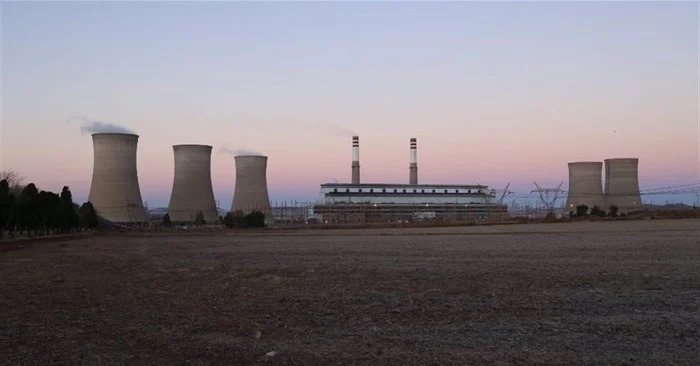
South Africa’s Just Energy Transition is beginning to take on a more local, people-centred shape, as Eskom, the Government of the Netherlands and the Mpumalanga provincial government officially launched the Grootvlei Climate Smart Horticulture Centre at the Grootvlei Power Station.
The project signals a shift from seeing the energy transition solely as a power-sector reform to viewing it as a platform for new, climate-resilient economic opportunities, particularly in communities historically dependent on coal-fired power generation.
Located within the Grootvlei Power Station precinct, the horticulture centre is designed to repurpose existing energy infrastructure for climate-smart food production, skills development and job creation. It is one of Eskom’s pilot initiatives under its Just Energy Transition (JET) Programme, testing how decommissioning or repurposing coal assets can support alternative livelihoods.
According to a joint statement by the partners, the project is already delivering early outcomes. Eight community members from Dipaleseng Municipality are currently undergoing training as greenhouse facilitators, while 75 local agripreneurs are set to join an Agripreneur Development Programme starting in April 2026.
Each agripreneur is expected to employ additional community members, with the programme projected to support the creation of sustainable jobs by 2030. While large-scale commercial farming is not yet the goal, the emphasis is firmly on practical training, climate-smart horticulture techniques and value-chain development.
Eskom said the centre demonstrates how energy-related infrastructure can be reimagined to support future-oriented economic activity beyond electricity generation, especially in regions facing economic uncertainty as South Africa transitions away from coal.
Eskom board chairperson Mteto Nyati described the initiative as a tangible example of what collaborative climate action can deliver.
“This project is an exciting early example of key stakeholders coming together to develop new economic activities that protect livelihoods and the local community as South Africa moves from a high-carbon to a lower-carbon economy,” Nyati said.
He acknowledged the leadership of the Minister of Electricity and Energy in convening the JET process, the financial support from the Government of the Netherlands and its partners, and the backing of the Mpumalanga provincial government and Dipaleseng Local Municipality.
Looking ahead, Eskom said the Grootvlei centre is expected to inform the development of a broader agri-economic hub, combining agriculture, skills development and logistics, with growing participation from the private sector.
“The Grootvlei project reinforces that South Africa’s energy transition is not only about changing power sources,” Eskom said, “but about creating new economic futures for people, land and local communities.”
As coal-dependent regions grapple with the realities of decarbonisation, projects like Grootvlei offer a glimpse of how climate action, food systems and inclusive development can intersect on the ground.


