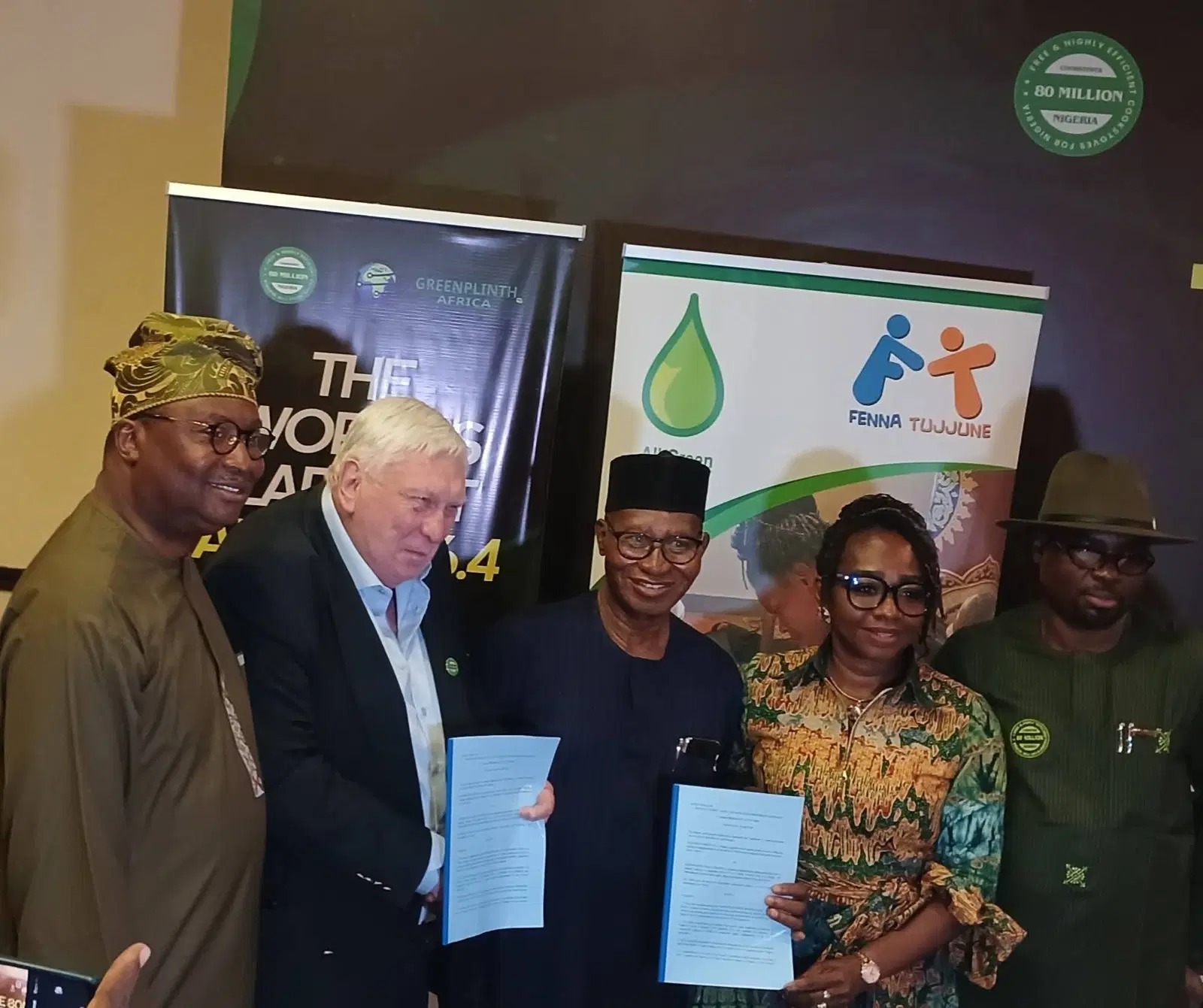
Nigeria is set to scale up access to clean cooking solutions following a $10 billion investment agreement between Allgreen Energy NV and Greenplinth Africa to deliver 80 million clean cookstoves nationwide.
The agreement, announced in Lagos, outlines a phased rollout beginning in July, with an initial tranche of 24 million cookstoves to be produced under a new manufacturing arrangement.
The Lagos State Government expressed support for the initiative, citing early results from pilot projects. Special Adviser on Climate Change and Circular Economy, Titilayo Oshodi, said a community-based study in Makoko showed a reduction in daily fuel use from 10 kilograms of firewood to about 1.37 kilograms of briquettes.
She added that the transition has led to improved indoor air quality and reduced exposure to harmful smoke.
President and Group Chief Executive Officer of Greenplinth Africa, Olawale Akinwumi, said the initiative is aimed at addressing the widespread reliance on traditional cooking methods across the country.
He noted that over 950 million people in Africa lack access to clean cooking, including more than 180 million in Nigeria.
“This project is focused on delivering clean and efficient cooking technologies at scale, particularly to households most affected by unsafe cooking practices,” Akinwumi said.
The programme is designed to replace firewood and charcoal-based cooking systems, which contribute significantly to indoor air pollution, deforestation and greenhouse gas emissions.
Under the plan, households will receive clean cookstoves and briquette fuel at no cost, a model aimed at removing affordability barriers and accelerating adoption in low-income communities.
Project stakeholders said the initiative is expected to deliver health and economic benefits, including reduced respiratory illnesses, lower household energy costs and new opportunities within local supply chains.
The launch convened senior executives from GreenPlinth Africa, including Dr. Olawale Akinwumi, FM, FICA, President and Group Chief Executive Officer and Engr. Babatunde Aina, Deputy Managing Director and Chief Financial Officer, alongside stakeholders across finance, manufacturing, the public sector, and the media.
They added that carbon financing mechanisms would support long-term sustainability, with emissions reductions from cleaner cooking expected to generate tradable carbon credits.
The project forms part of Greenplinth Africa’s broader “Agenda 2030” strategy to expand clean cooking access across the continent, positioning Nigeria as a pilot for wider regional deployment.