




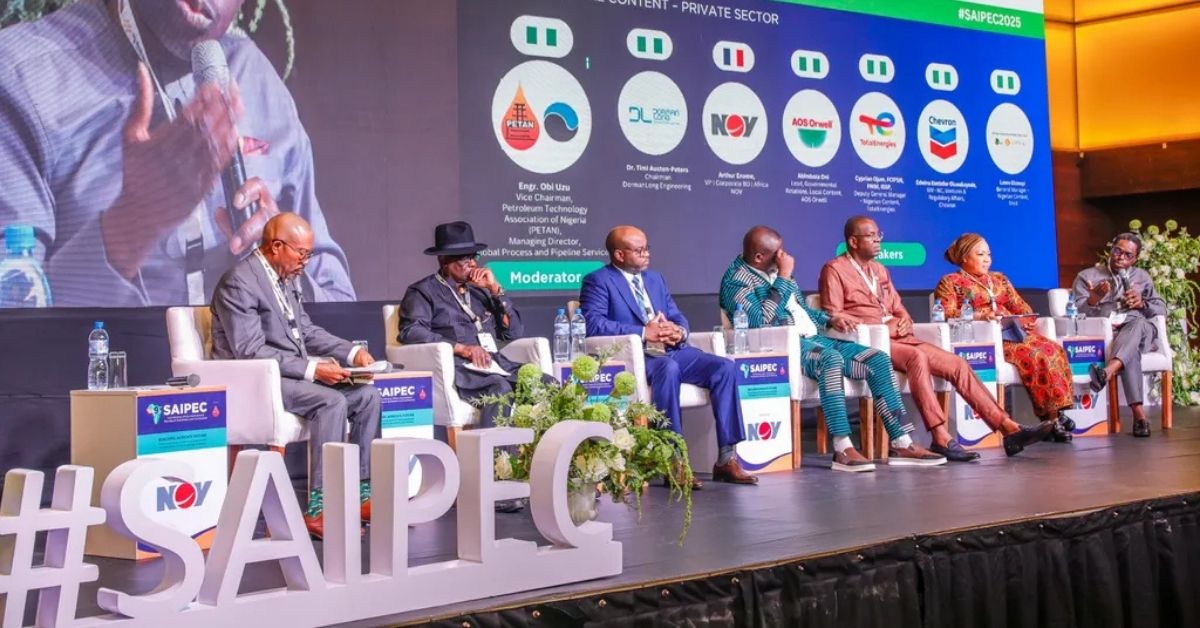
The 10th Sub‑Saharan Africa International Petroleum Exhibition and Conference (SAIPEC 2026) opened in Lagos this Tuesday, bringing together African policymakers, regulators, national oil companies and energy investors to assess the outlook for the continent’s oil and gas sector amid fiscal pressures, energy transition uncertainty and rising expectations for domestic value creation.
The three‑day conference, organised by the Petroleum Technology Association of Nigeria (PETAN), is being held at the Eko Convention Centre from February 10 to 12, with participation from governments and industry players across West, East and Southern Africa.
Organisers said this year’s programme reflects growing tensions between sustaining hydrocarbon investment, advancing energy transition goals and strengthening local industrial capacity. Discussions are structured around policy and regulation, gas development and industrialisation, and human capital and leadership renewal.
Opening‑day sessions focus on regulatory frameworks, fiscal terms and local content policies, with senior Nigerian officials and executives from African national oil companies expected to outline how governments are seeking to balance revenue mobilisation with investor confidence. Nigeria’s petroleum sector reforms and local content framework feature prominently in the discussions, given their influence on regulatory design in other African producing countries.
Gas development is central to the second day of the conference, reflecting its expanding role in African energy strategies. Panels are examining domestic gas utilisation, cross‑border infrastructure and financing conditions for gas‑to‑power, fertiliser and industrial projects. Several African producers, including Nigeria, Senegal and Mozambique, are positioning gas as a transition fuel and a source of export earnings, even as project financing faces tighter global conditions.
Alongside the conference sessions, an exhibition featuring more than 150 companies showcases engineering, technology and service solutions across the oil and gas value chain. While hydrocarbons remain the focus, exhibitors are also highlighting digitalisation, efficiency improvements and emissions management technologies.
The final day of SAIPEC 2026 will turn attention to workforce development, diversity and institutional capacity, as energy companies and regulators confront skills gaps and succession challenges linked to ageing assets and evolving technologies.
Speakers at the conference include energy ministers, heads of regulatory agencies, chief executives of national oil companies and senior industry executives from across the continent. Their participation underscores SAIPEC’s role as a regional platform for comparing national experiences and sharing policy and operational lessons.
Oil and gas revenues continue to play a critical role in the public finances of several African economies, while gas‑based projects underpin industrialisation and energy access strategies. As debates around transition pathways and global demand intensify, discussions at SAIPEC are expected to shape how African countries position their energy sectors within a changing global landscape.


