




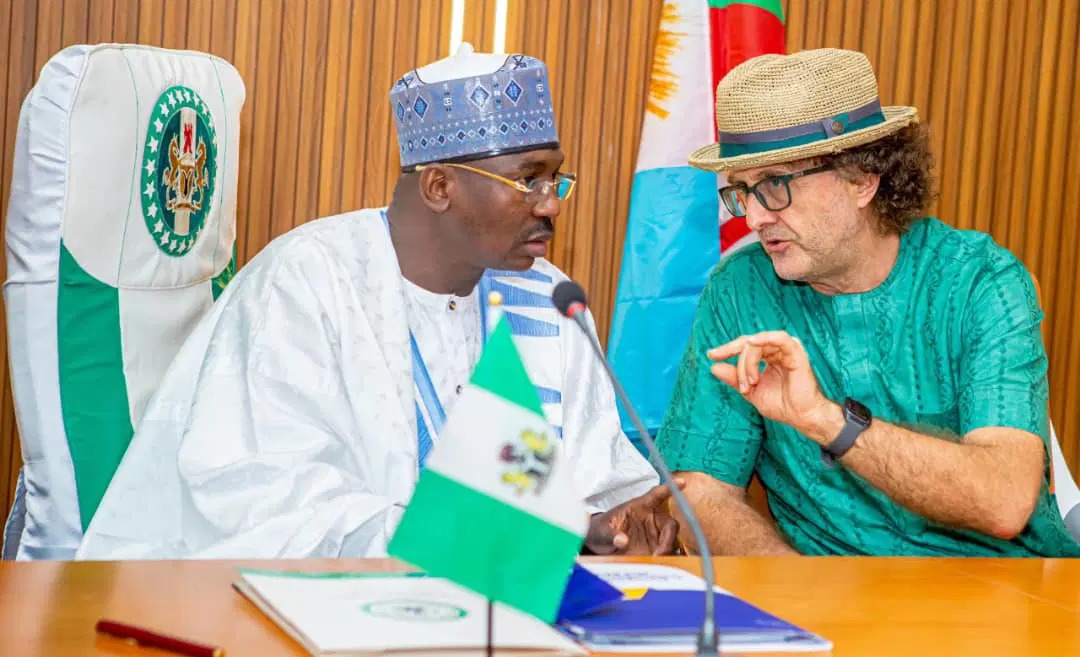
A high-level delegation from the European Union, accompanied by UN agencies and international partners, have concluded a mission to Sokoto State, underscoring a renewed commitment to strengthening systems that support women, children, adolescents, and vulnerable families.
The delegation, led by the EU Delegation to Nigeria and joined by UNICEF, UNFPA, the International Labour Organization (ILO), and partners including Plan International Nigeria, Action Against Hunger (ACF Nigeria), CARE, and the Danish Refugee Council (DRC), met with Sokoto State Governor, Dr. Ahmed Aliyu, to align priorities on sustainable service delivery and inclusive development.
Governor Aliyu reaffirmed the state’s focus on practical, people-centred solutions, noting that investments in health, education, and social protection are central to improving wellbeing and resilience across communities, particularly for women and children.
During the visit, the delegation assessed progress across EU-supported programmes in schools, primary healthcare facilities, internally displaced persons (IDP) camps, and community-based initiatives. These interventions aim to strengthen education systems, expand access to quality healthcare, and build shock-responsive social protection mechanisms in a region facing the combined pressures of poverty, insecurity, climate change, and displacement.
“This mission highlighted the importance of investing in systems that protect and empower people, especially children and young people,” said Massimo De Luca, Head of Cooperation at the EU Delegation to Nigeria. “The EU remains committed to supporting Sokoto State in pursuing inclusive development that leaves no one behind.”
A major focus of the mission was the EU-funded Supporting Sustainable Social Protection Systems in Nigeria (SUSI) programme, backed by €14 million in funding. Under SUSI, Sokoto State is developing a comprehensive social registry that captures multiple dimensions of poverty, helping authorities better identify and support households in need—including families without birth registration or National Identification Numbers, out-of-school children, malnourished households, and those with limited access to primary healthcare.
According to the ILO, the initiative strengthens institutional capacity by promoting program-based budgeting and interoperable data systems, enabling more targeted and efficient delivery of social assistance.
At community and school sites, the delegation observed efforts to create safe and inclusive learning environments, improve teacher support, and strengthen community engagement—key pillars for sustaining education outcomes, particularly for girls. Health facility visits highlighted progress in making services more adolescent-friendly and gender-responsive, ensuring respectful and accessible care for women and young people.
UN agencies and partners emphasised the importance of community-led approaches and coordinated action in addressing complex, interlinked challenges such as hunger, malnutrition, displacement, and climate stress. From nutrition and livelihoods to education and protection, partners stressed that durable impact depends on strong local leadership, reliable data, and sustained investment.
The mission concluded with a shared commitment among the EU, the Sokoto State Government, UN agencies, and implementing partners to deepen collaboration in support of long-term social and economic development, anchored in resilient systems that protect the most vulnerable and enable communities to thrive.


