




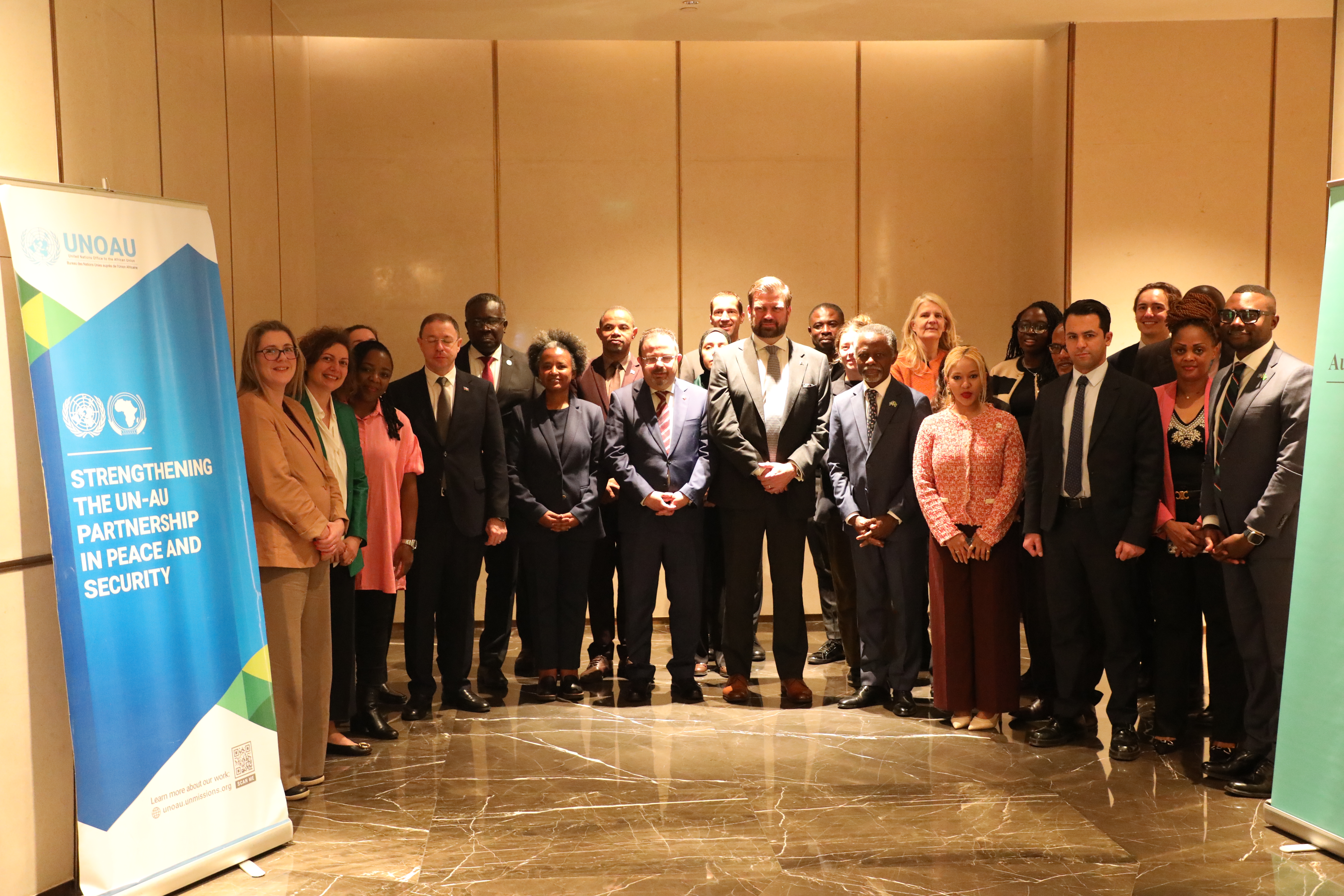
The African Union Commission, with support from the United Nations Office to the African Union, and Australia as incoming COP31 Presidency of Negotiations, today convened a Roundtable Dialogue on Climate, Peace and Security (CPS) in Africa at the Skylight Hotel in Addis Ababa, Ethiopia. The dialogue brought together representatives from the African Union, AU Member States, United Nations entities and Regional Economic Communities to exchange views and strengthen collaboration on climate-related security risks and responses across the continent.
The roundtable took place against a backdrop of growing momentum across Africa to elevate climate, peace and security as a strategic continental priority. While African States contribute the least to global greenhouse gas emissions, they continue to bear a disproportionate share of the adverse impacts of climate change, particularly in fragile and conflict-affected contexts. In these settings, climate change acts as a “risk multiplier”, exacerbating existing vulnerabilities, intensifying competition over natural resources, deepening inequalities, and contributing to displacement.
In response, African States have increasingly advanced Africa-led policy frameworks and processes to better understand and address these complex and interlinked challenges. These include the Africa Climate Security Risk Assessment and the ongoing development of the Common African Position on Climate, Peace and Security (CAP-CPS), alongside efforts to integrate CPS considerations into national and regional climate and peacebuilding frameworks. This momentum reflects a collective ambition to ensure that African perspectives, priorities and solutions are effectively represented in global climate processes, including in the lead-up to COP31 and COP32.
In this context, the roundtable provided a timely platform for stakeholders to exchange views, align priorities and consolidate a common African voice on climate, peace and security, while strengthening partnerships to support coordinated action.
Reflecting the African Union’s policy approach, Dr Philip Attuquayefio, Climate, Peace and Security Adviser at the African Union Commission underscored that the African Union approaches Climate, Peace and Security through a risk-informed and human-security lens. This approach does not equate climate change with conventional security threats; it does not transfer climate security into the realm of militarised response and it does not privilege security interventions over adaptation, resilience and sustainable development. He further emphasized that rather, it recognises that climate impacts can interact with existing vulnerabilities and compound risks to peace and security. Addressing these interconnected risks therefore requires coordinated action across prevention, response, recovery and resilience-building to protect communities, strengthen institutions and sustain peace.
Mr. Parfait Onanga-Anyanga, Special Representative of the Secretary-General to the African Union and Head of UNOAU, underscored that climate shocks and long-term stressors are increasingly shaping peace and security dynamics across Africa, acting as a risk multiplier particularly in fragile and resource-scarce contexts. He welcomed the African Union’s leadership in advancing the Common African Position on Climate, Peace and Security and stressed the importance of sustained UN support, including through the Climate Security Mechanism, to strengthen joint analysis, early warning and policy responses. He emphasized that the priority now is to translate climate ambition into concrete action and ensure that climate investments deliver resilience, stability and peace dividends, reaffirming UNOAU’s commitment to supporting Africa’s priorities in this regard.
Dr Peter Hunter, Ambassador of Australia to Ethiopia and Permanent Representative of Australia to the African Union, emphasised that climate change is one of the defining challenges of our time. Its effects are not limited to national borders, nor does it discriminate between regions or countries. To be effective, climate resiliency must be regional and global. He further noted that Australia is committed to working with African partners, the African Union and the United Nations to strengthen cooperation, support locally led solutions and build resilience in communities most affected by climate change.
During the high-level policy dialogue, statements were also delivered by Amb. Ruslan Nasibov, Ambassador of the Republic of Azerbaijan to Ethiopia and Permanent Representative to the African Union; Amb. Lemlem Fiseha, Permanent Representative of the Federal Democratic Republic of Ethiopia to the African Union and United Nations Economic Commission for Africa; and Amb. Berk Baran, Ambassador of the Republic of Türkiye to Ethiopia and Permanent Representative to the African Union.
During the high-level policy dialogue, participants reflected on national and regional priorities on climate, peace and security, including the need to strengthen Africa-led approaches and enhance the visibility of CPS within global policy discussions. Discussions highlighted the importance of aligning continental priorities with international climate agendas and ensuring that African States have a stronger voice and meaningful engagement in global climate decision-making processes.
Discussions on global climate processes and partnerships focused on how recent COP outcomes and initiatives linking climate action with peace, relief and recovery can support African priorities. Participants emphasized the importance of leveraging these platforms to advance African positions, strengthen advocacy efforts and build strategic partnerships in the lead-up to COP31 and COP32.
The technical session on the CAP-CPS process provided a platform to examine practical tools and implementation pathways. Discussions focused on integrating CPS considerations into Nationally Determined Contributions (NDCs) and National Adaptation Plans (NAPs), strengthening early warning and risk analysis, enhancing access to climate finance, and promoting conflict-sensitive approaches to climate adaptation and resilience.
The roundtable concluded with a shared recognition of sustaining the current momentum. Participants underscored the need to continue working collectively to amplify African voices, translate policy commitments into action, and ensure that climate, peace and security remains a central pillar of both continental and global agendas.


